Contributor
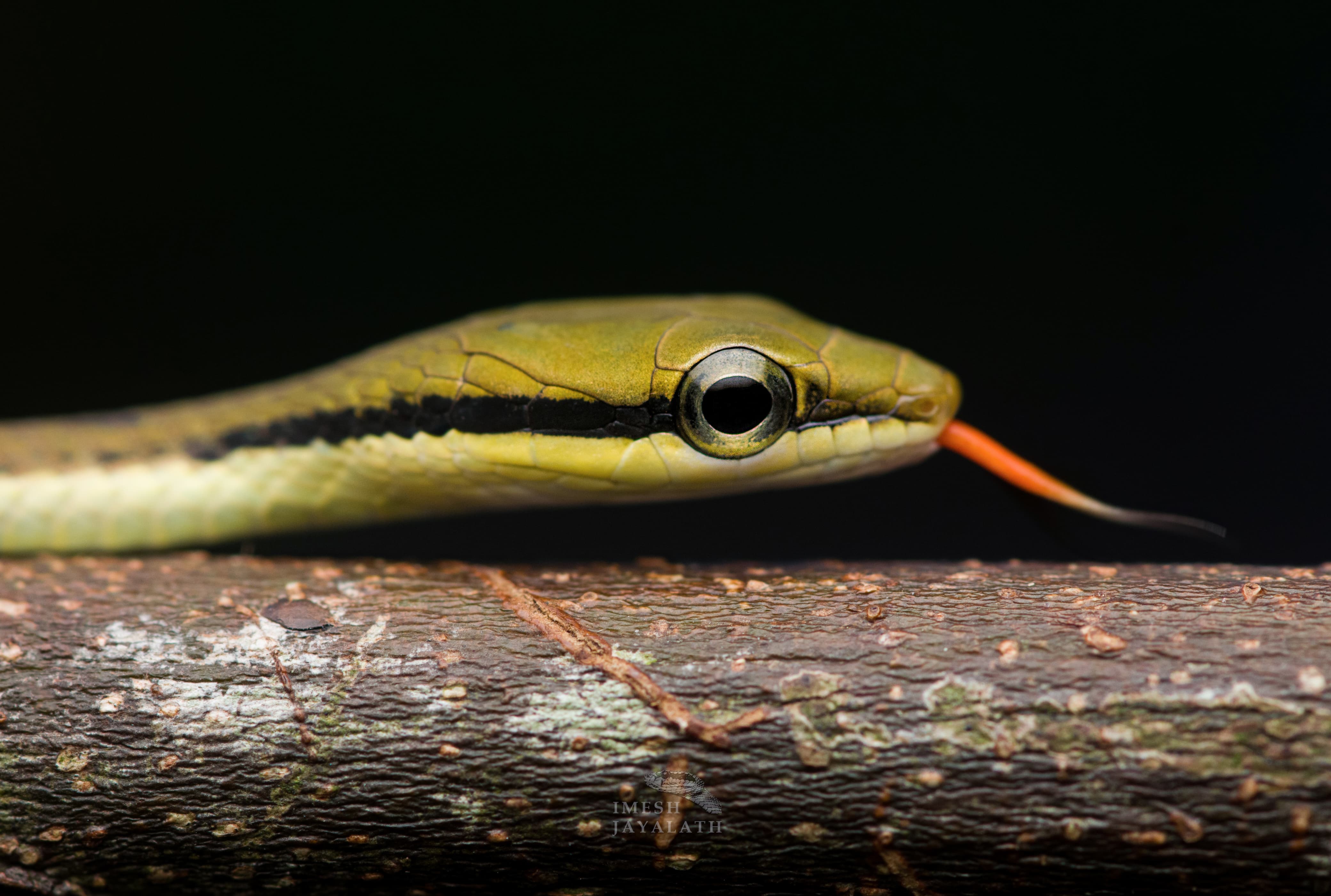
Dendrelaphis wickrorum
The Wickramasinghe's Bronzeback (Dendrelaphis wickrorum) is a slender, non-venomous arboreal snake endemic to Sri Lanka's wet zone. It was formally described in 2020 after being recognized as a distinct species that had previously been misidentified as the Sri Lankan Bronzeback (Dendrelaphis bifrenalis). The species was named in honour of renowned Sri Lankan herpetologist L. J. Mendis Wickramasinghe and Nethu Wickramasinghe for their significant contributions to the study and conservation of Sri Lanka's reptiles and amphibians. This elegant snake inhabits lowland and submontane rainforests, with confirmed records from Pundaluoya, Labugama, Kuda Waskaduwa, Pinwatta (Panadura), and other wet-zone forests. It is commonly found in the forest understory and sub-canopy, where its slender body, bronze-brown coloration, and excellent camouflage allow it to move effortlessly among branches and foliage. Adult females can reach about 110 cm in total length, while males are generally smaller.
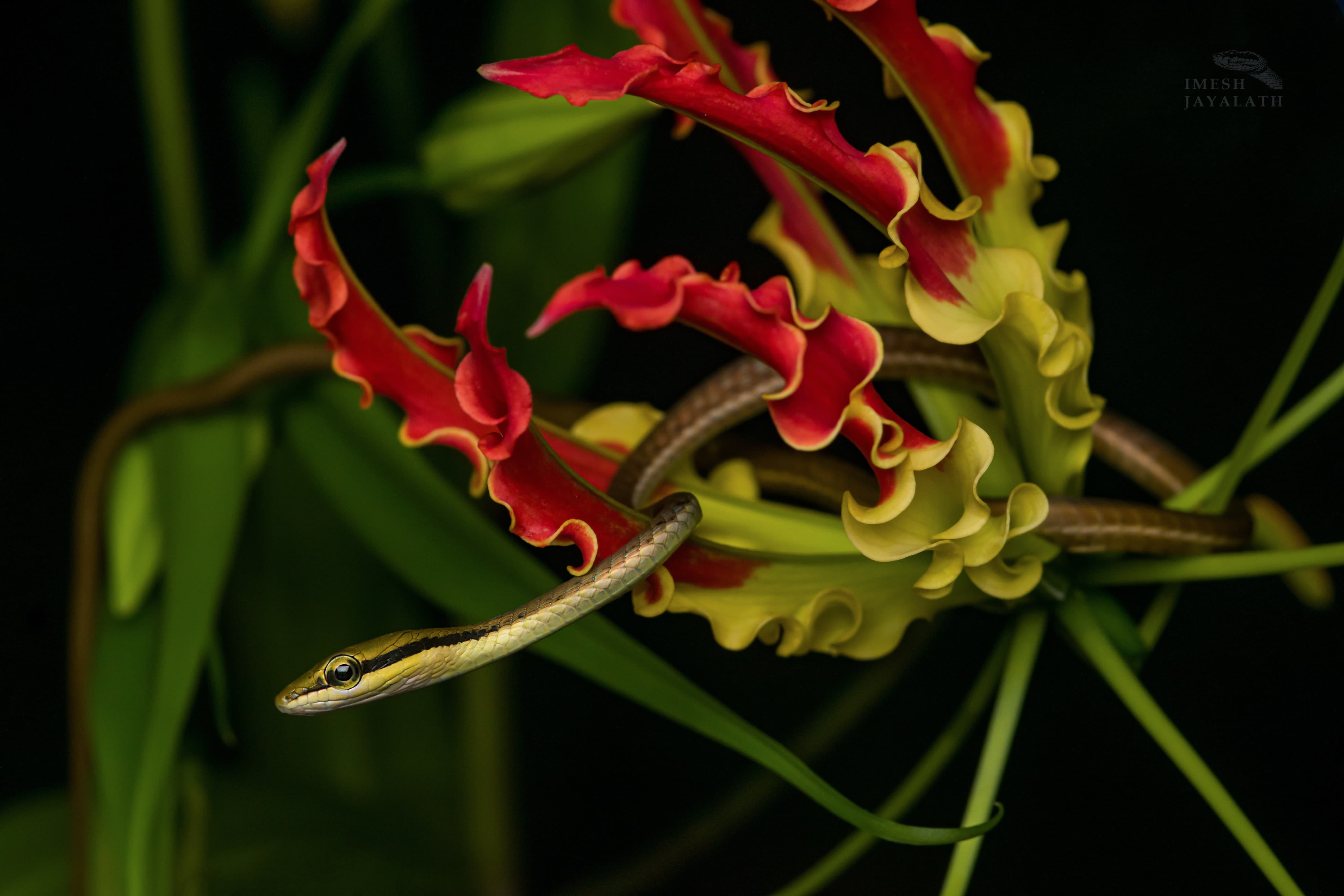
Dendrelaphis wickrorum
Wickramasinghe's Bronzeback is a fast-moving, diurnal snake that spends most of its life in trees and shrubs, descending to lower vegetation only occasionally. It is an active visual hunter, feeding mainly on small tree-dwelling vertebrates such as lizards, frogs, geckos, and occasionally small birds or their eggs. Like other bronzeback snakes, it is harmless to humans and relies on speed and agility to escape predators rather than aggression. It shares its habitat with several other bronzeback species, including Dendrelaphis sinharajensis, D. schokari, and D. caudolineolatus, making Sri Lanka's wet-zone forests an important centre of diversity for this group. Although little is currently known about its breeding biology, the species depends on well-preserved rainforest habitats, making the protection of Sri Lanka's remaining wet-zone forests essential for its long-term conservation.