Contributor
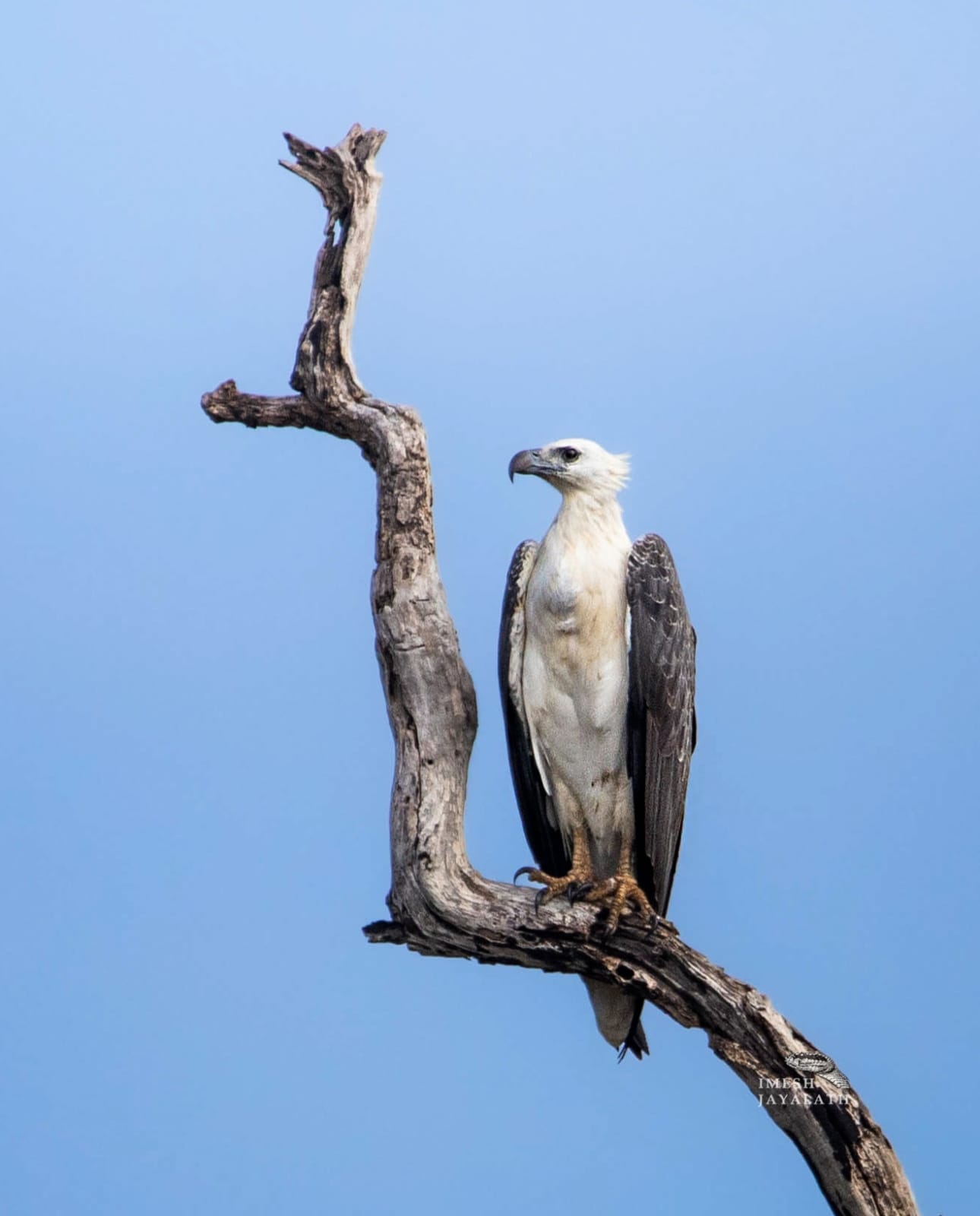
White-bellied sea eagle
The white-bellied sea eagle (Icthyophaga leucogaster) is a large, powerful bird of prey commonly seen along coastlines, rivers, lakes, and wetlands across South and Southeast Asia, Australia, and nearby islands, including Sri Lanka. Easily recognized by its striking white head, breast, belly, and tail contrasting with grey upperparts and black flight feathers, it has a broad wingspan that can exceed two metres and a distinctive wedge-shaped tail. Females are noticeably larger than males, and young birds start life in brown plumage, slowly turning white over several years. This eagle is strongly tied to water, where it hunts mainly fish, but it is highly opportunistic and also feeds on reptiles, waterbirds, small mammals, and carrion, often stealing food from other birds. Usually seen alone or in pairs, it forms long-term pair bonds and nests in massive stick nests placed high in tall trees, cliffs, or even man-made structures near water, often reusing the same nest for many years. Although globally listed as Least Concern, populations have declined in some regions due to habitat loss, human disturbance near nesting sites, and pollution. Deeply respected in many cultures, especially among Indigenous communities in Australia and parts of Asia, the white-bellied sea eagle is not only a top predator in aquatic ecosystems but also a powerful symbol woven into folklore, traditions, and local identity across its wide range.