Contributor
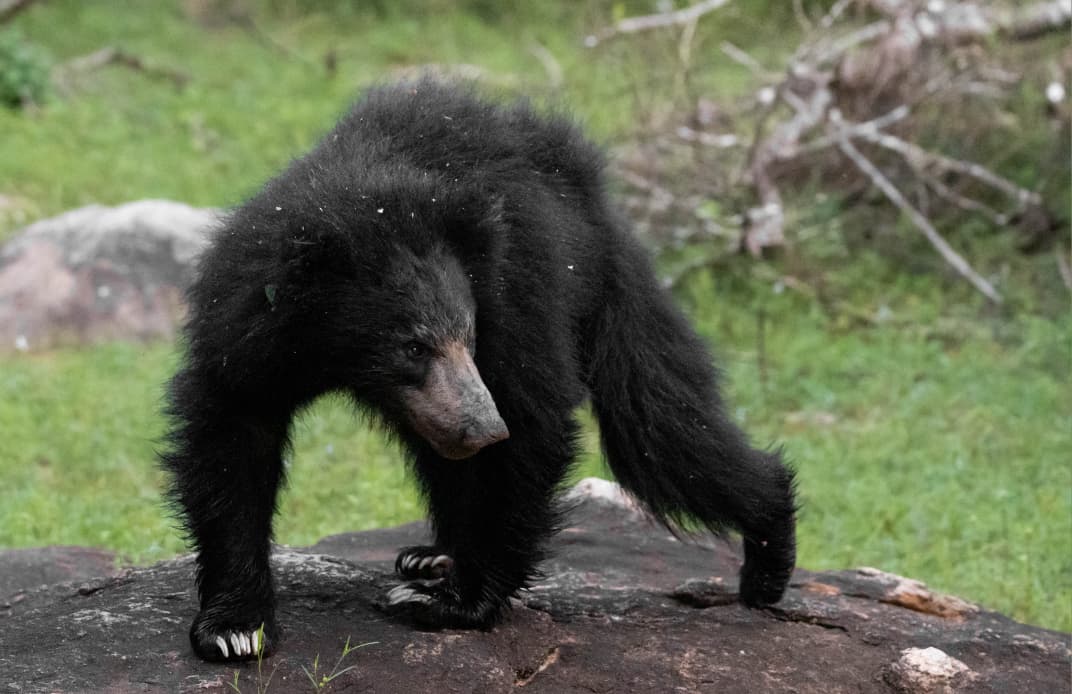
Sri Lankan sloth bear (Melursus ursinus inornatus)
The Sri Lankan sloth bear (Melursus ursinus inornatus) is a unique and highly threatened subspecies found only in Sri Lanka, making it one of the island’s most iconic endemic mammals. Smaller and lighter than its Indian counterpart, this bear is adapted to the lowland dry-zone forests, scrublands, and rocky terrain of the north, east, and south-eastern parts of the country, including areas such as Yala and Wilpattu. It is easily recognized by its long, shaggy black coat, flexible lips, powerful curved claws, and a pale chest mark that is often faint or even absent in Sri Lankan individuals. A mainly nocturnal and shy animal, the Sri Lankan sloth bear is best known for its specialized diet ants and termites form the core of its feeding strategy, sucked up noisily using its long snout after tearing open mounds and rotten logs. It also feeds on seasonal fruits like palu and weera, making it an important but often overlooked seed disperser within dry-zone ecosystems.
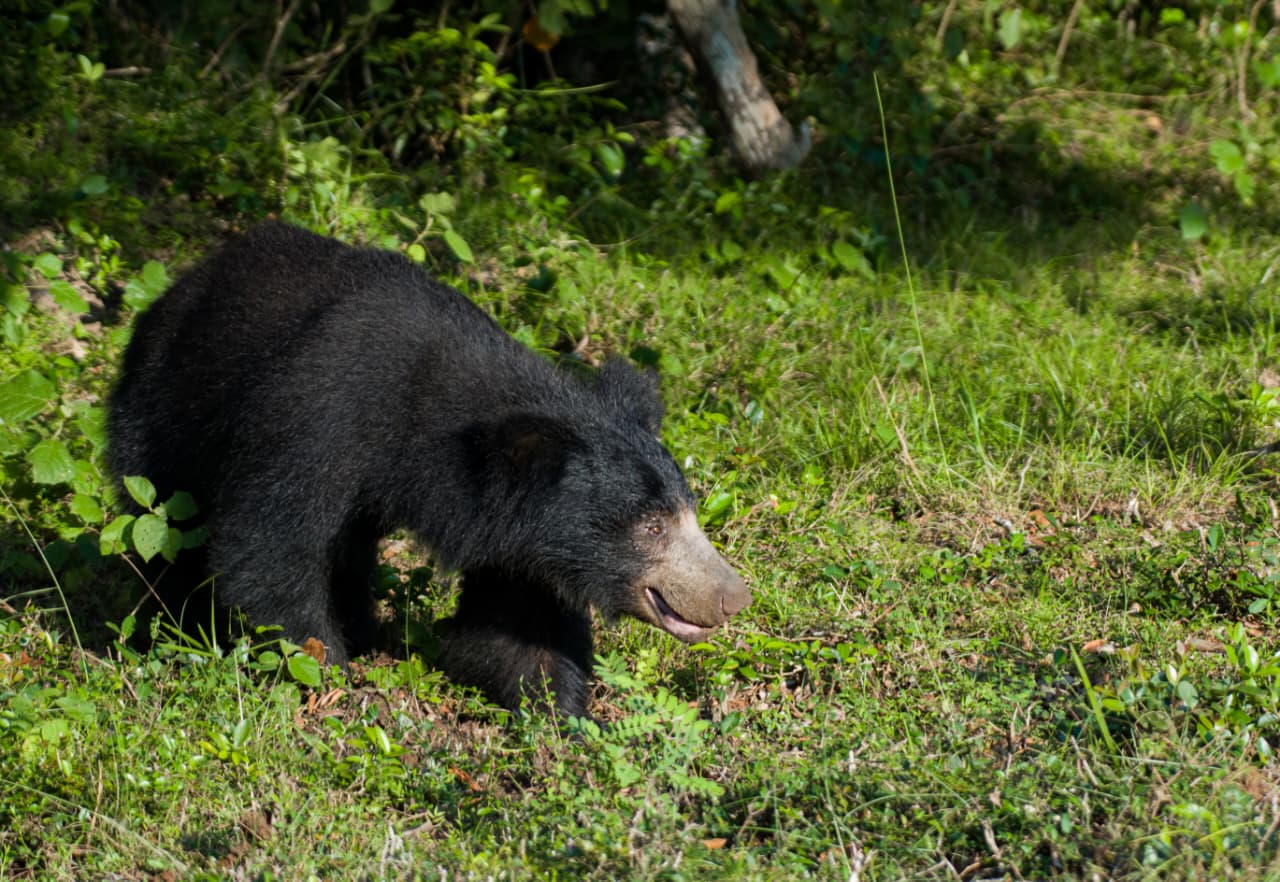
Sri Lankan sloth bear (Melursus ursinus inornatus)
Despite its ecological importance, the Sri Lankan sloth bear is listed as Endangered, with estimates suggesting fewer than 1,000 individuals remain in the wild, possibly as low as 500. Large-scale loss of dry-zone forests, agricultural expansion, and increasing human–bear conflict have pushed this species into isolated pockets of habitat. Encounters often occur when bears search for food or water near villages, sometimes leading to serious injuries and retaliatory killings. Unlike most bears, mothers carry their cubs on their backs—an iconic and rare behavior within the bear family—and cubs stay dependent for up to two to three years. Known locally as “Walaha” in Sinhala and “Karadi” in Tamil, the Sri Lankan sloth bear holds a deep place in local culture, folklore, and fear alike. Protecting remaining forests, reducing conflict through awareness and waste management, and strengthening protected areas are critical if this quiet, misunderstood giant of Sri Lanka’s dry forests is to survive into the future.