Contributor
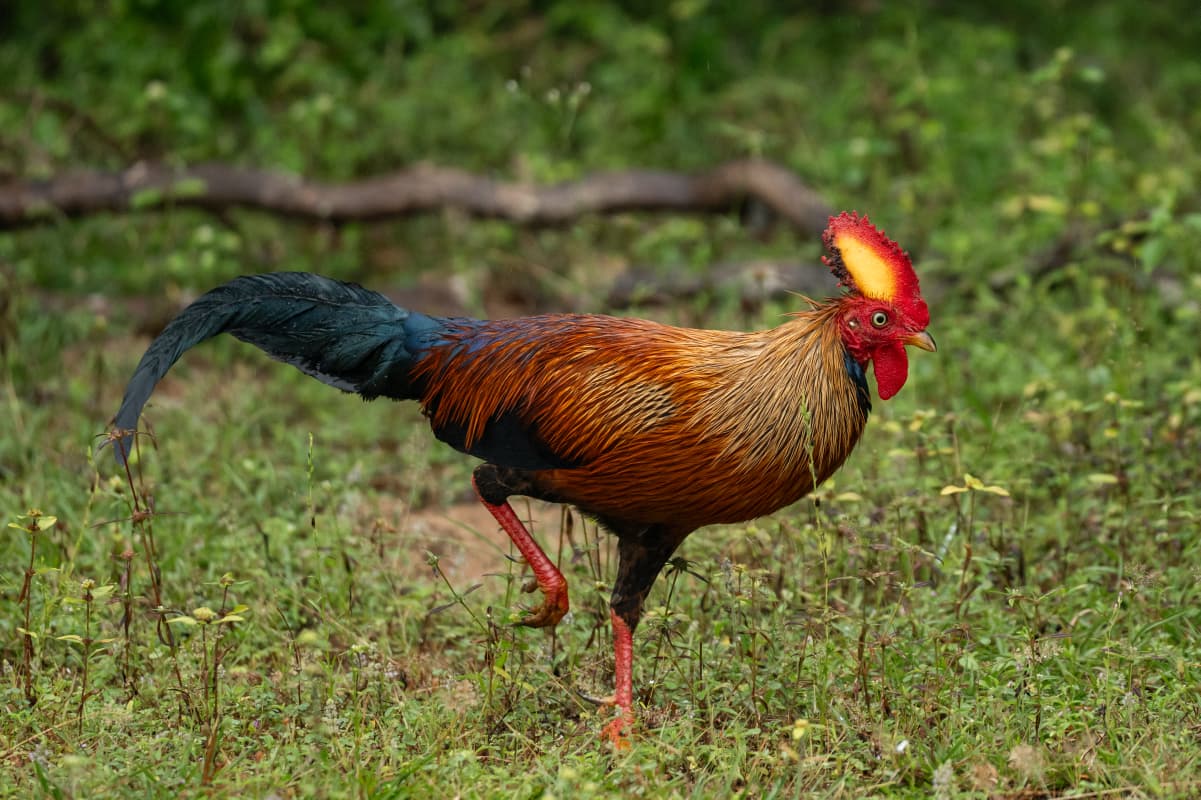
Sri Lankan Junglefowl (Gallus lafayettii)
The Sri Lankan Junglefowl (Gallus lafayettii), also known as the Ceylon Junglefowl, is an endemic bird found only in Sri Lanka and serves as the country's national bird. Closely related to the Grey Junglefowl and Red Junglefowl, it is commonly seen in forests, scrublands, and protected areas such as Yala National Park, Sinharaja Forest Reserve, and Kitulgala. Males are strikingly colourful, with bright orange-red plumage, golden hackles, a red comb with a yellow centre, and dark iridescent wings and tail, while females are much smaller and cryptically coloured in shades of brown, providing excellent camouflage while nesting. The species occurs from lowland forests up to elevations of about 2,000 metres. Primarily a ground-dwelling bird, the Sri Lankan Junglefowl spends much of its time scratching through leaf litter in search of seeds, fruits, insects, and other small invertebrates. Unlike many other bird species, males actively participate in protecting nests and caring for chicks. Females usually lay two to four eggs in well-hidden nests on the ground or occasionally in abandoned nests above ground. The species is known for its complex social behaviour, unique breeding system, and distinctive vocalizations, including loud crowing calls given by males at dawn. As an important component of Sri Lanka’s forest ecosystems and a symbol of the island’s natural heritage, the Sri Lankan Junglefowl remains one of the country’s most iconic and frequently encountered endemic birds.