Contributor
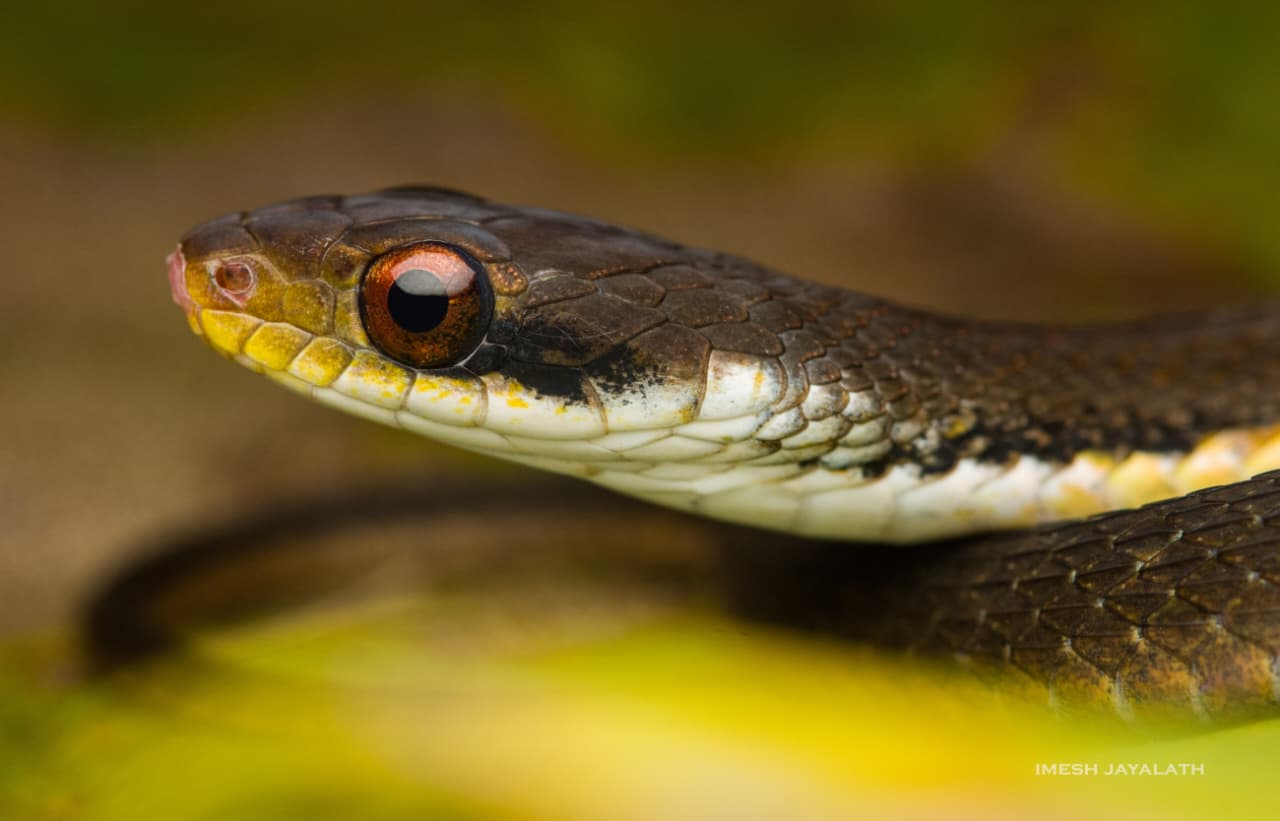
Sri Lankan Blossom Krait
The Sri Lankan Blossom Krait is one of the island’s most misunderstood snakes, admired for its beauty yet often feared because of its name. Endemic to Sri Lanka, this snake is also known as the Sri Lanka Keelback or Mal Karawala (මල් කරවලා). Juveniles are especially striking, with bright yellow or red spots edged in black running along an olive-brown body, giving rise to the name “Blossom.” As the snake matures, these colours fade into duller brown or olive tones. It lives quietly in wet zone forests and parts of the intermediate zone, from lowlands to mid-hills, favouring moist, well-vegetated habitats near streams. Although commonly mistaken for the highly venomous true kraits (Bungarus species), this snake belongs to a different group and is far less dangerous.
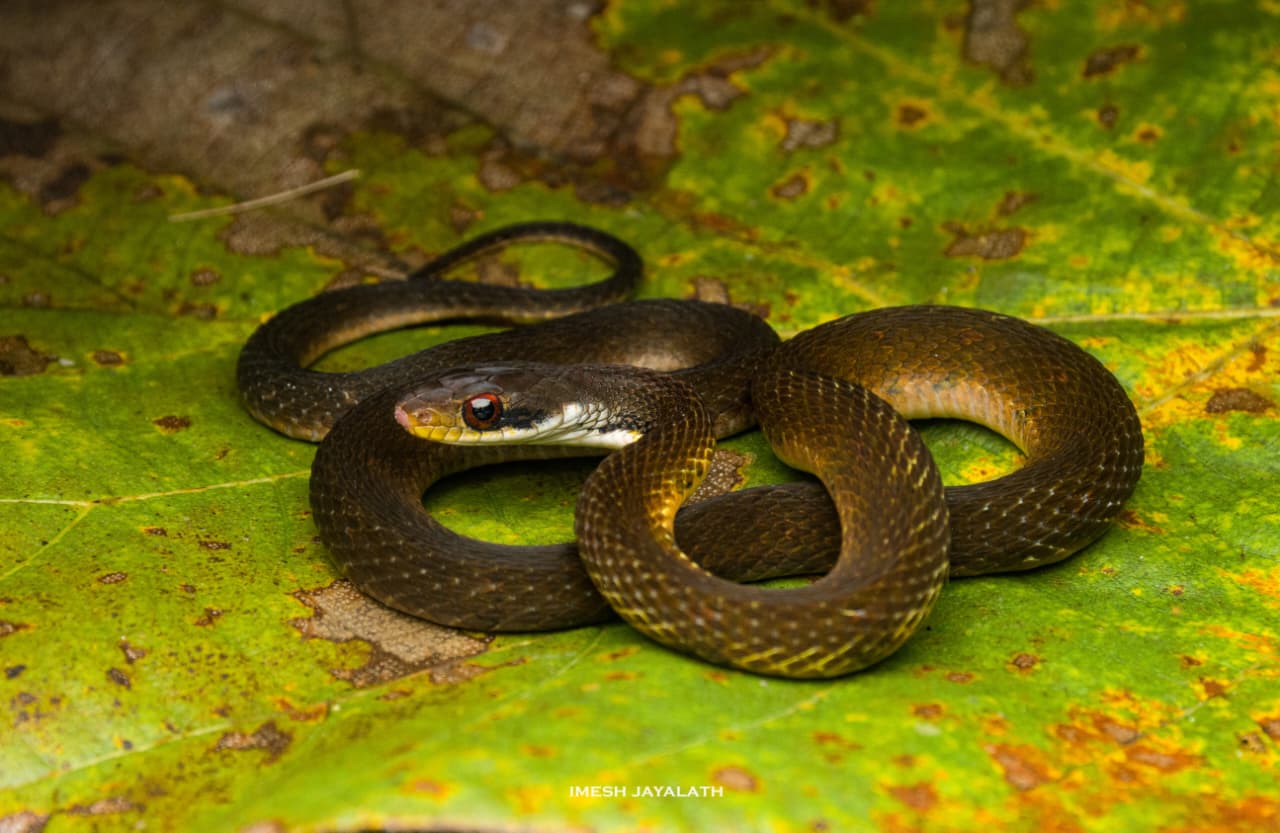
Sri Lankan Blossom Krait
Slow-moving and generally calm, the Sri Lankan Blossom Krait relies more on warning displays than aggression. When threatened, it raises the front part of its body and inflates its neck to reveal flashes of red skin between the scales, a dramatic signal meant to scare predators away. It feeds mainly on frogs, while young snakes hunt insects such as grasshoppers. The species is egg-laying, with females producing around seven eggs that hatch around March. Though it lacks front fangs, it has enlarged grooved teeth at the back of the jaw and possesses a mild venom that can cause serious illness in rare cases. Despite this, it is not a deadly snake. Its real story is that of a unique, endemic reptile—beautiful, secretive, and often wrongly judged—playing a quiet but important role in Sri Lanka’s forest ecosystems.