Contributor

Saw-scaled viper
Echis carinatus, commonly known as the saw-scaled viper, is a small but highly venomous snake found across the Indian subcontinent, the Middle East, and parts of Central Asia, including Sri Lanka. It is one of the famous “big four” snakes responsible for most snakebite cases in the region, mainly due to its wide distribution and tendency to live close to human settlements. This species usually grows up to about 60 cm, with a short, distinct head and a body covered in rough, keeled scales that give it a serrated appearance. Its colour varies from sandy brown to reddish or grey, with pale markings and patterns that provide excellent camouflage in dry habitats such as scrublands, rocky areas, and sandy soils.
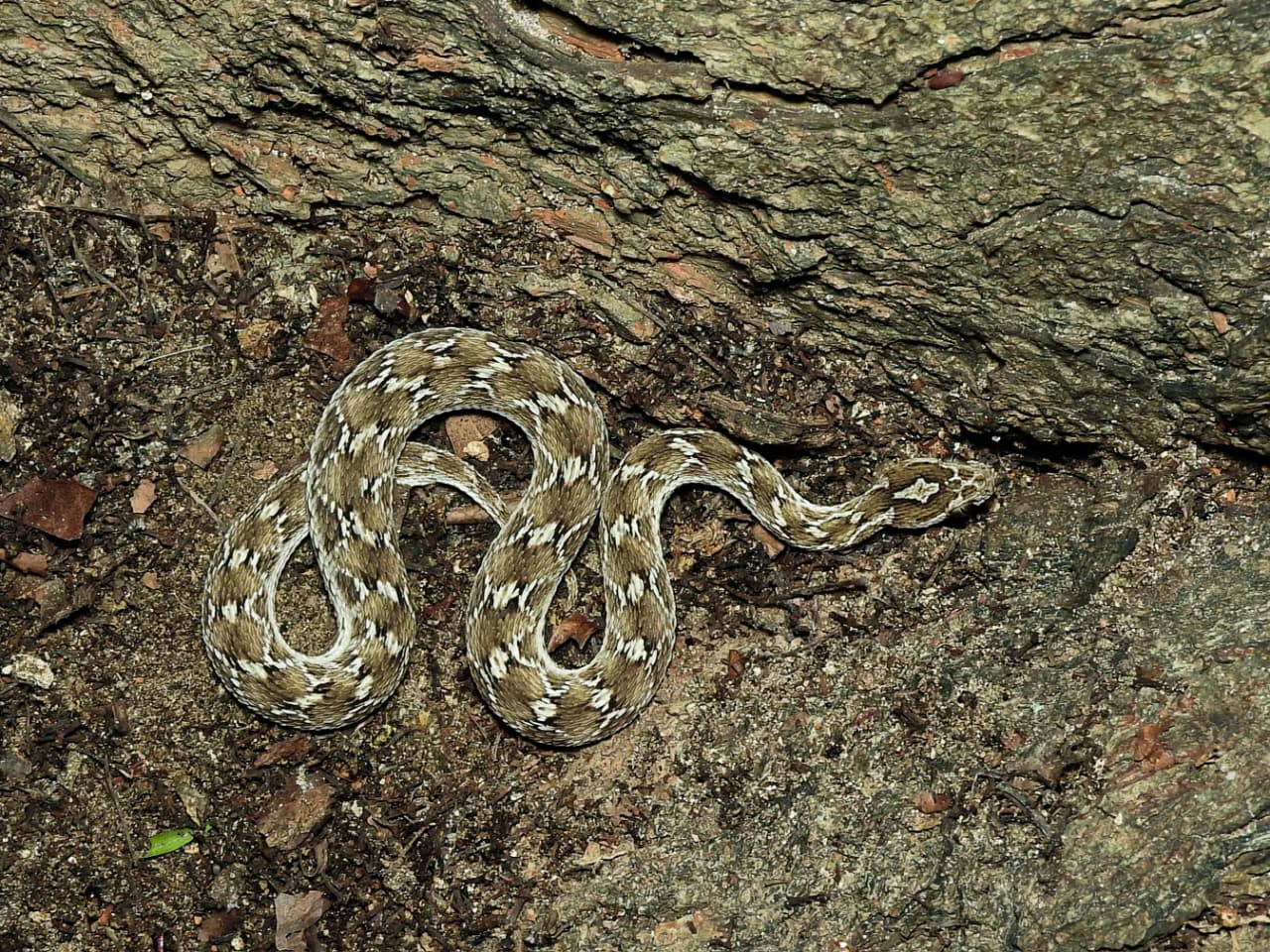
Saw-scaled viper
The saw-scaled viper is mostly nocturnal and very active at night, often hiding under rocks, in burrows, or even partially buried in sand during the day. It is known for its aggressive behaviour and unique defensive posture, where it coils into a figure-eight shape and produces a rasping sound by rubbing its scales before striking quickly. Its diet includes rodents, lizards, frogs, and insects, making it an adaptable predator. The species gives birth to live young, usually between 3–15 at a time. Its venom is highly potent and can cause serious bleeding disorders and other life-threatening effects, though effective antivenom treatment has reduced fatalities. Despite its danger, this snake also plays an important role in ecosystems and even contributes to medical research, as compounds from its venom are used in certain drugs and blood-related treatments.