Contributor
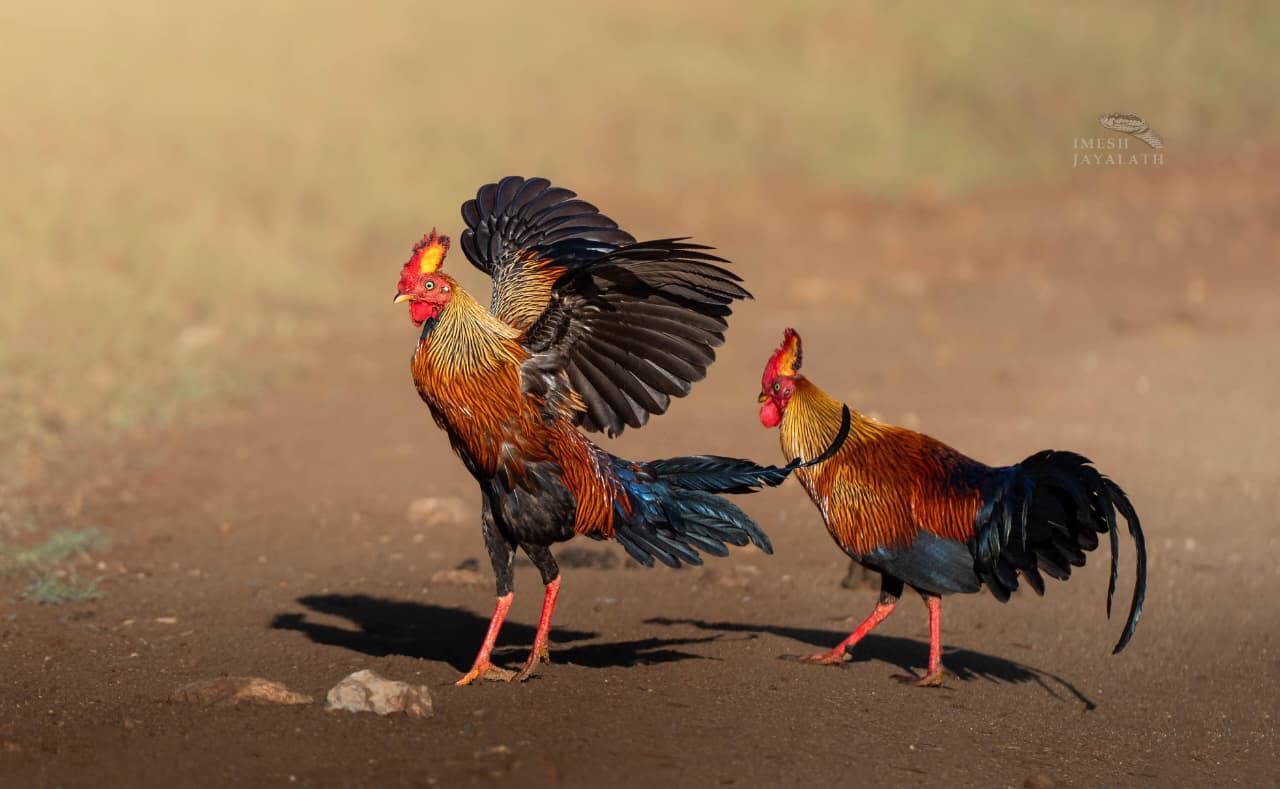
Sri Lankan Junglefowl (Gallus lafayettii)
The Sri Lankan Junglefowl (Gallus lafayettii), also known as the Ceylon Junglefowl, is Sri Lanka's national bird and an endemic member of the pheasant family (Phasianidae). It is one of only four living species of junglefowl and is most closely related to the Grey Junglefowl (Gallus sonneratii), although the brightly coloured male closely resembles the Red Junglefowl, the wild ancestor of the domestic chicken. This terrestrial bird is widely distributed across the island, inhabiting dry-zone forests, wet-zone rainforests, scrublands, and forest edges from sea level to about 2,000 m, and is commonly seen in protected areas such as Yala, Sinharaja, Wilpattu, and Kitulgala. The species is strongly sexually dimorphic: males are large, brilliantly coloured birds with golden hackles, rich orange-red body plumage, glossy dark blue-black wings and tail, bright red facial skin, and a distinctive red comb with a yellow centre, while females are much smaller and cryptically coloured in mottled brown, providing excellent camouflage during nesting. Sri Lankan Junglefowl spend most of their time on the ground scratching through leaf litter in search of seeds, fallen fruits, shoots, insects, spiders, termites, and other small invertebrates, although they readily fly into trees to roost or escape predators. Their loud, distinctive calls, particularly the male's ringing "cor-cor-chow" crow at dawn, are among the characteristic sounds of Sri Lanka's forests.
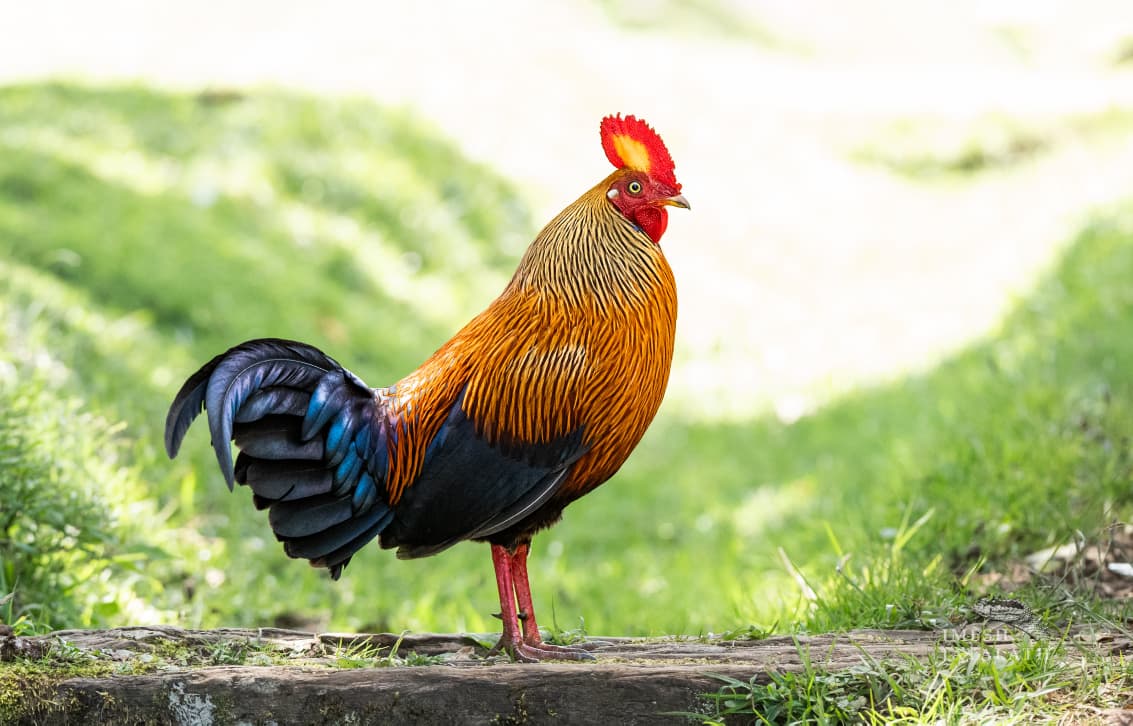
Sri Lankan Junglefowl (Gallus lafayettii)
Breeding usually coincides with the rainy seasons when food is abundant. The species has an unusual facultative polyandrous breeding system, in which a female may associate with two or more males, although she typically mates with the dominant male. The female lays 2–4 cream-coloured eggs, often marked with brown or purple spots, in a well-concealed nest on the ground or occasionally in abandoned tree nests. She incubates the eggs, while the dominant male actively guards the nesting area and subordinate males help defend the territory from predators such as snakes and mongooses. The incubation period is relatively short—around 20 days, shorter than in other junglefowl species—and the chicks are highly dependent on protein-rich prey such as insects, sowbugs, pillbugs, and small land crabs during their early development. Outside the breeding season, these birds are generally seen singly, in pairs, or in small family groups, remaining alert and relying on their excellent hearing and camouflage to avoid danger. Although the Sri Lankan Junglefowl is currently classified as Least Concern, it depends on healthy forest ecosystems, and habitat loss and fragmentation remain localized threats. As one of Sri Lanka's most iconic endemic birds, it is an important symbol of the island's unique biodiversity and evolutionary history.