Contributor
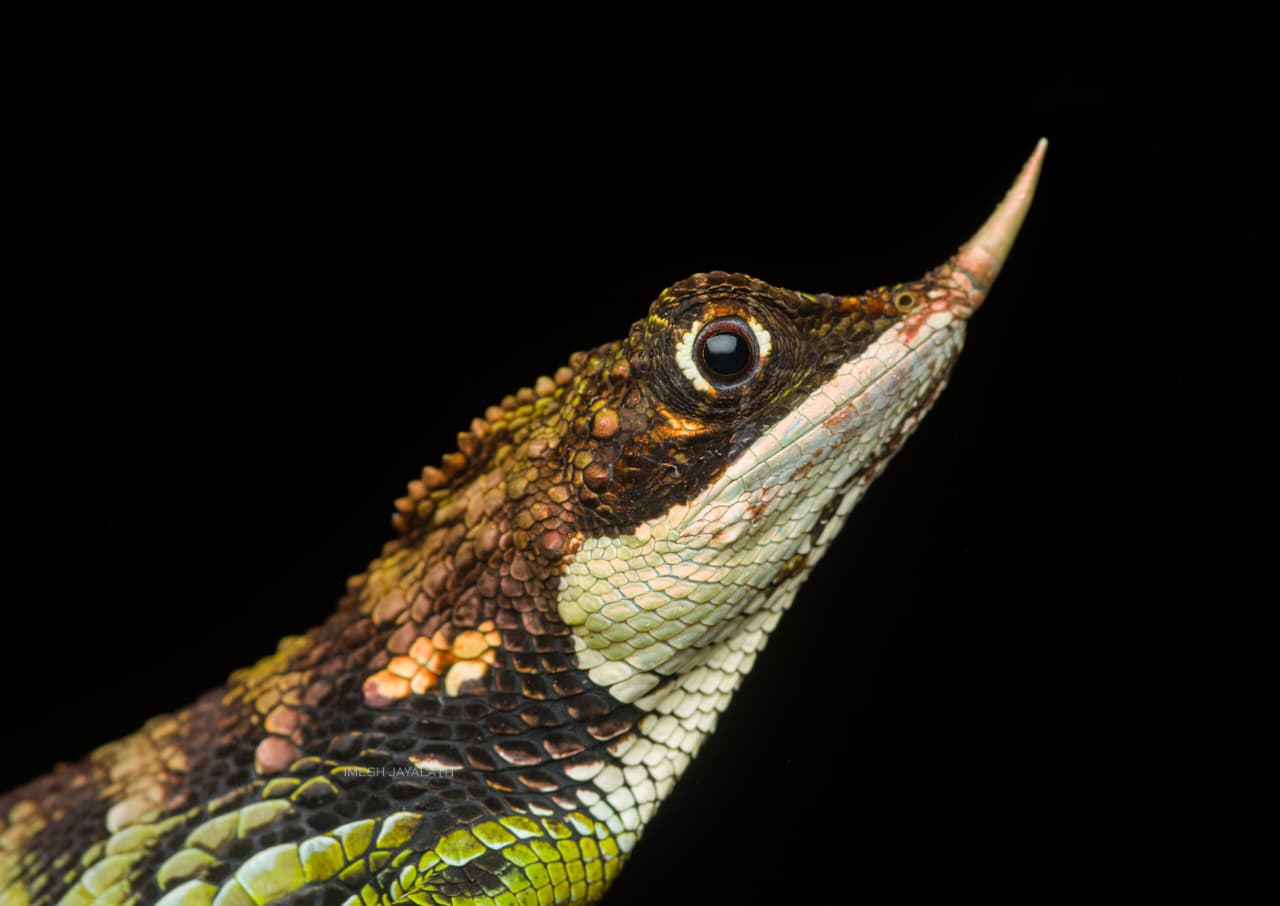
Rhino-horned Lizard
The Rhino-horned Lizard (Ceratophora stoddartii) is a remarkable little reptile found only in the misty highlands of Sri Lanka. Living in cool montane forests around places like Nuwara Eliya, Horton Plains, and Hakgala, it blends perfectly into tree trunks covered with moss and lichen. Males carry a long horn-like projection on their snout—about two-thirds the length of the snout itself—giving the species its famous “rhino” look, while females have a much smaller or almost absent horn. Their bodies shift between brownish green and yellowish brown tones, with banded tails and pale undersides, making them almost invisible against the forest bark. These lizards prefer resting vertically on trunks 1–2 meters above the ground, moving slowly and carefully through the cloud forest air.
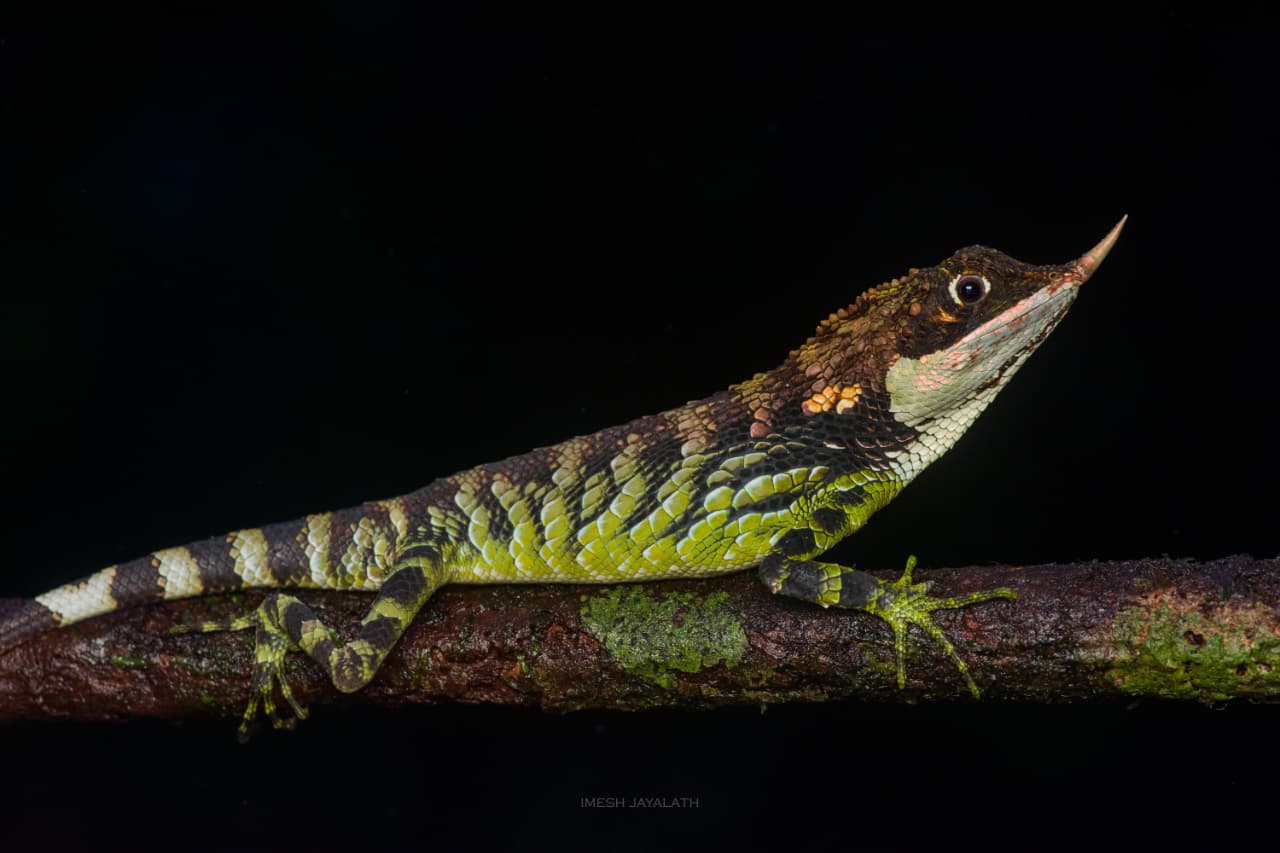
Rhino-horned Lizard
In their daily life, these lizards rely heavily on camouflage and the structure of the forest. When the weather turns harsh, they retreat into thick moss beds for shelter. Though mostly staying on trees, they sometimes make short trips to the ground to snatch prey like caterpillars or even earthworms, changing their colours to deeper browns to match the leaf litter. When threatened, they open their mouths wide to reveal a bright orange interior—an impressive warning display for such a gentle-looking species. Breeding takes place around July, with females laying small clutches of 2–5 eggs in the soil or leaf litter. The young emerge after about 80–90 days and are often seen on the forest floor, perfectly camouflaged among fallen leaves and sticks.