Contributor
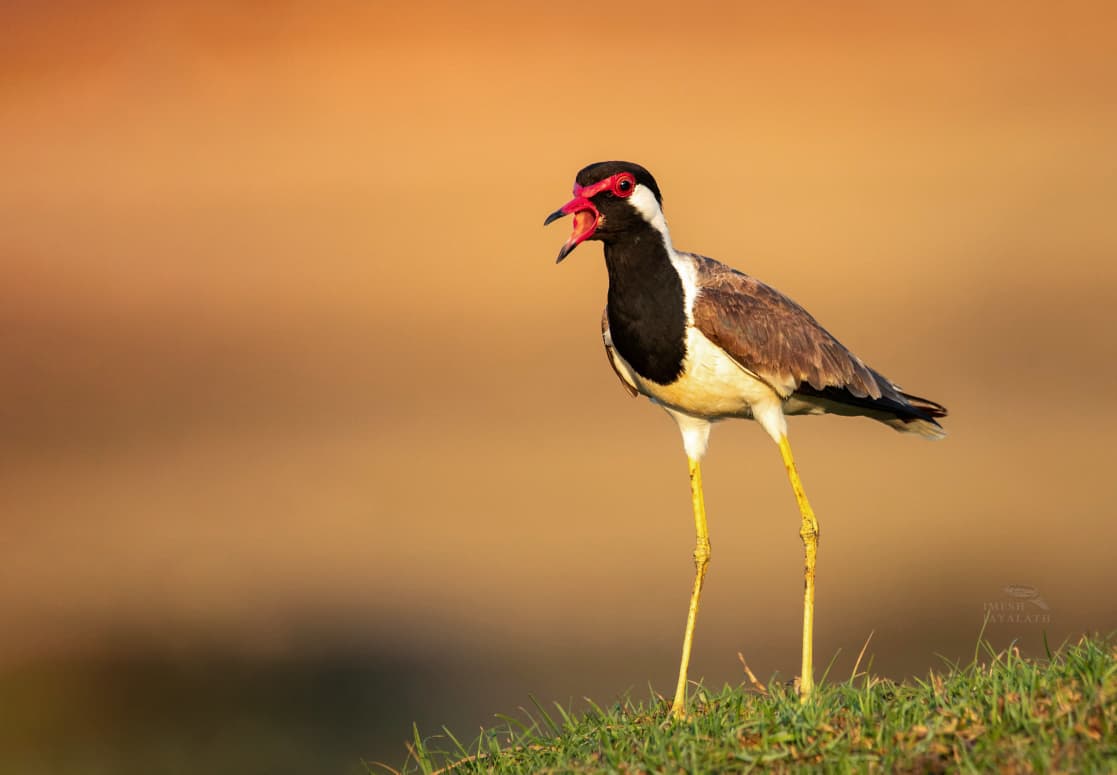
Red-wattled lapwing (Vanellus indicus)
The red-wattled lapwing (Vanellus indicus) is a large, ground-dwelling wader commonly seen across South and parts of Southeast Asia, including Sri Lanka. It is easily recognized by its bold black-and-white plumage, brown wings with a glossy sheen, long yellow legs, red bill with a black tip, and the distinctive red fleshy wattles in front of the eyes. True to its nickname, the “did-he-do-it” bird, it is extremely vocal and alert, giving loud alarm calls day and night at the slightest disturbance. These birds are usually found in pairs or small groups near water bodies such as tanks, paddy fields, grazing lands, and open wetlands, though larger flocks may gather outside the breeding season. They run in short bursts while feeding, picking insects and other small invertebrates from the ground, and are known to be active even at night, especially during bright moonlight.
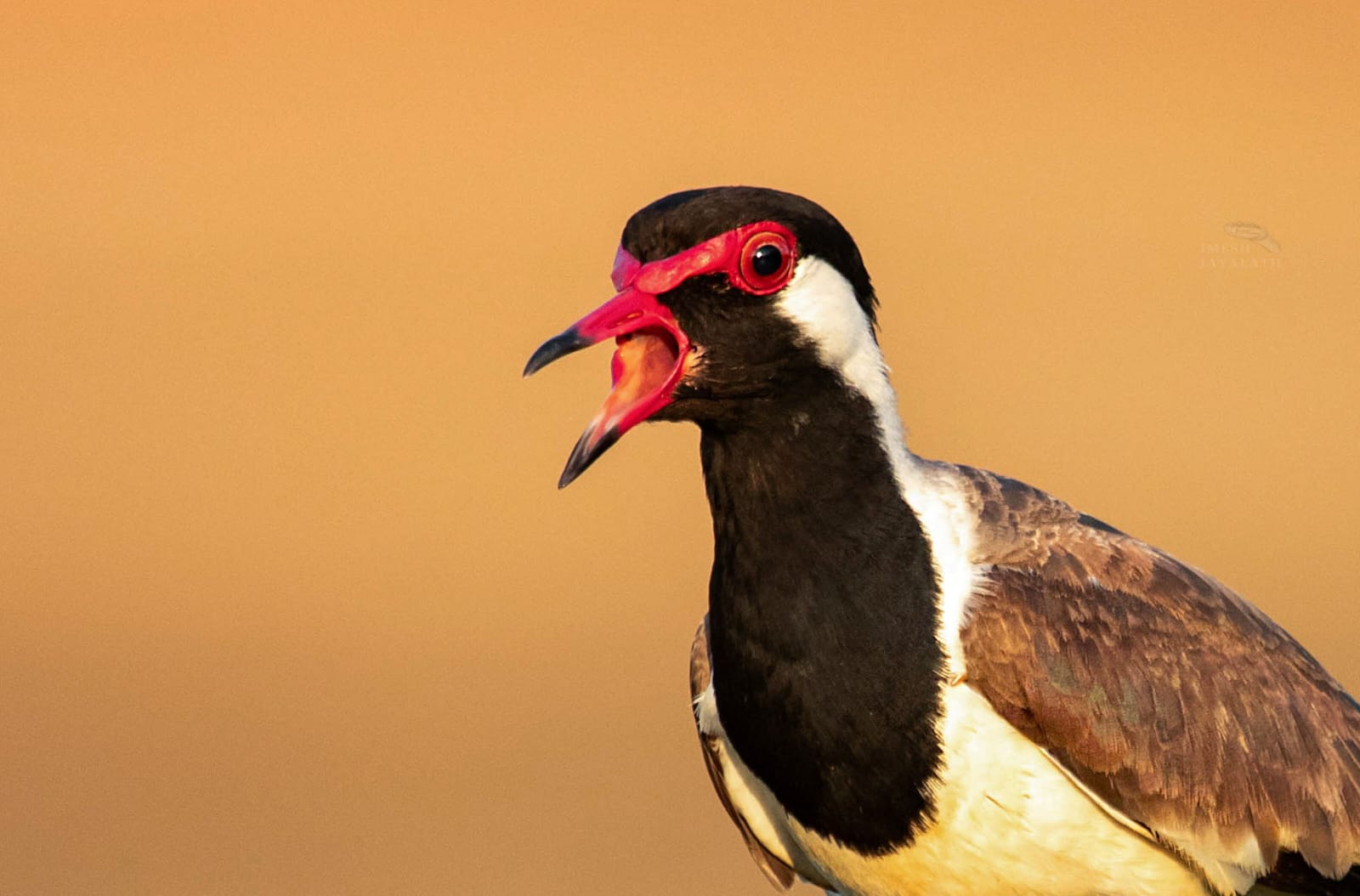
Red-wattled lapwing (Vanellus indicus)
Breeding takes place mainly between March and August, with nests being simple scrapes on the ground that blend perfectly with their surroundings. The female usually lays three to four well-camouflaged eggs, making nests difficult to detect. Both parents fiercely defend the nesting area, diving at intruders and using loud calls to distract predators. The chicks hatch after about a month and leave the nest almost immediately, following their parents while relying on camouflage to avoid danger. Despite high egg losses due to predators, many chicks survive once past the first week. Widespread and largely resident across its range, the red-wattled lapwing remains one of the most familiar and successful wetland birds in South Asia, deeply woven into local folklore and rural life.