Contributor
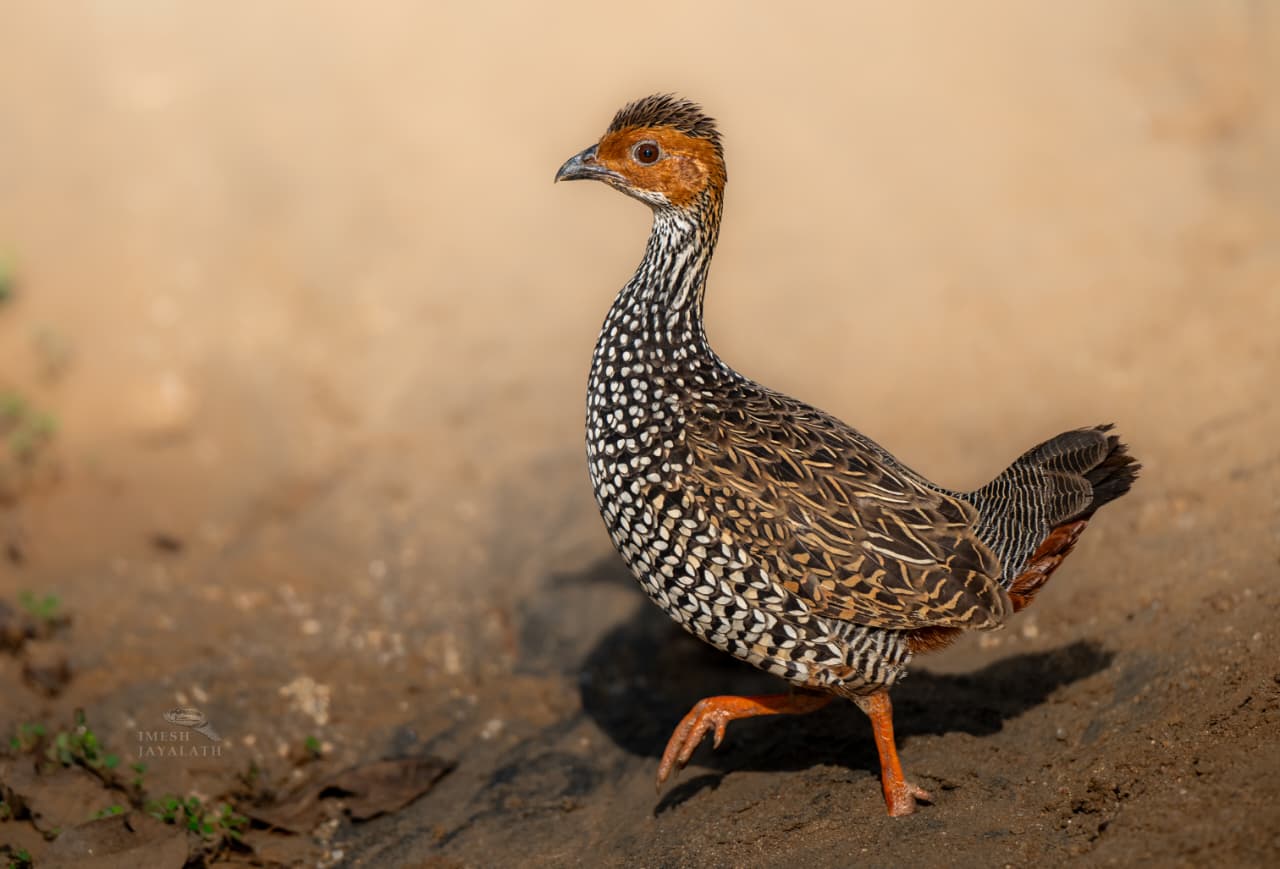
Painted Francolin (Francolinus pictus)
The Painted Francolin (Francolinus pictus), also known as the Painted Partridge, is a ground-dwelling gamebird of the Indian subcontinent, occurring patchily across central and southern India and in the lowlands of southeastern Sri Lanka. It is generally associated with semi-dry, gently undulating grasslands, scrub and cultivated areas, occupying habitats that are drier than those preferred by the Black Francolin but somewhat wetter than those of the Grey Francolin. In Sri Lanka, the species has been recorded around Bibila and the Nilgala Forest Reserve in the Uva plains, including the Gal Oya region. It is a relatively inconspicuous bird and can be difficult to observe in dense grass and scrub. The face and throat are a rich rufous colour, while the underparts are marked with conspicuous white spots, and the legs range from orange-yellow to reddish. It can resemble the female Black Francolin, but lacks that species' characteristic rufous hind collar and dark stripe behind the eye. The Painted Francolin also tends to have somewhat more arboreal habits than the Black Francolin, and both sexes lack leg spurs. Three geographical forms have been described, with the Sri Lankan population recognized as F. p. watsoni.
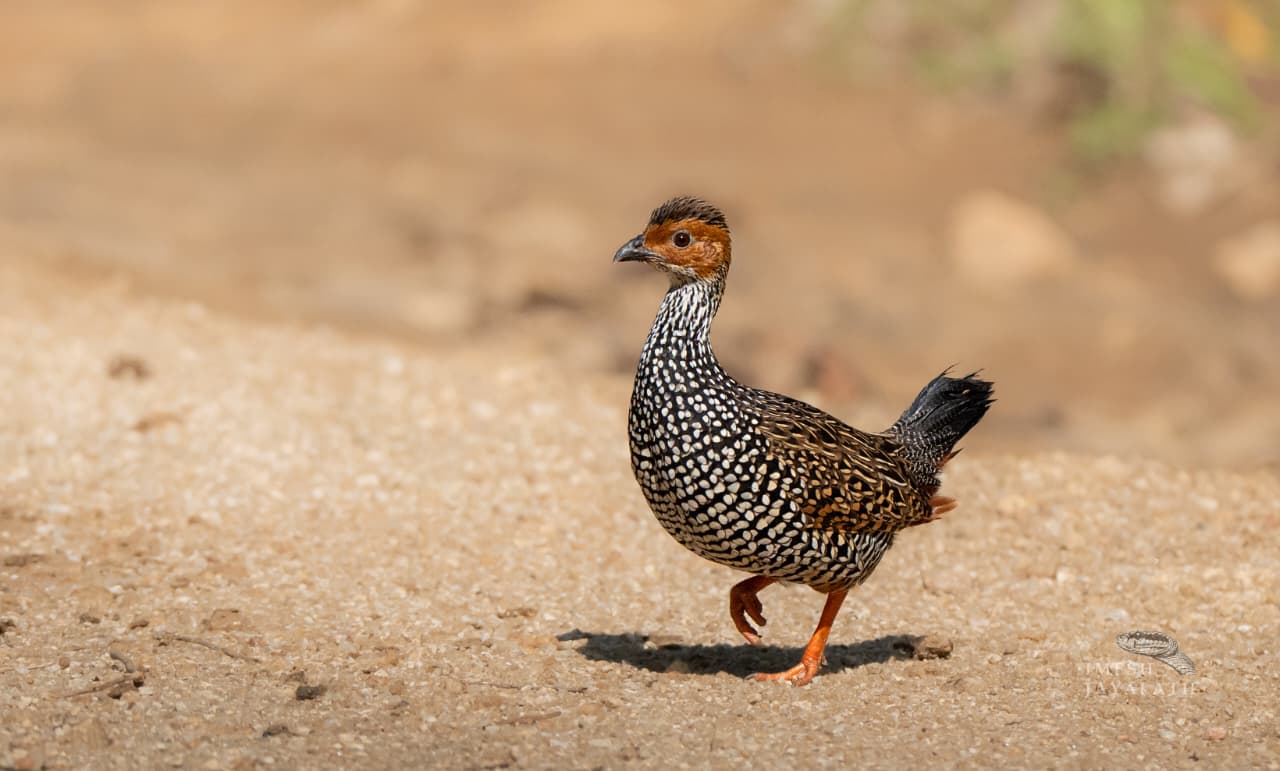
Painted Francolin (Francolinus pictus)
The Painted Francolin becomes particularly vocal during the breeding season following the monsoon, generally from June to October. Its distinctive, broken and somewhat guttural call is usually given during the early morning from an elevated position such as a mound, bush or tree stump, and nearby birds may respond to one another. Outside the breeding period, calling may also occur around dusk. Despite its ability to perch and roost in trees, it spends much of its time moving through grass and low vegetation, where it feeds on grass seeds, cultivated rice grains, insects such as beetles and underground plant material including the tuberous roots of Cyperus rotundus. When walking, it may characteristically raise its tail, while a disturbed bird often remains motionless until an observer approaches closely before suddenly flushing. It may roost either in trees or on the ground. Breeding nests are simple scrapes made on the ground, with a typical clutch consisting of around six or seven smoky-white eggs. Populations can fluctuate seasonally with the monsoon, and the species has historically faced pressure from hunting in parts of its range. In Sri Lanka, its occurrence in the dry-zone grasslands and scrub of the Uva region makes it a distinctive member of the island's lowland bird community.