Contributor
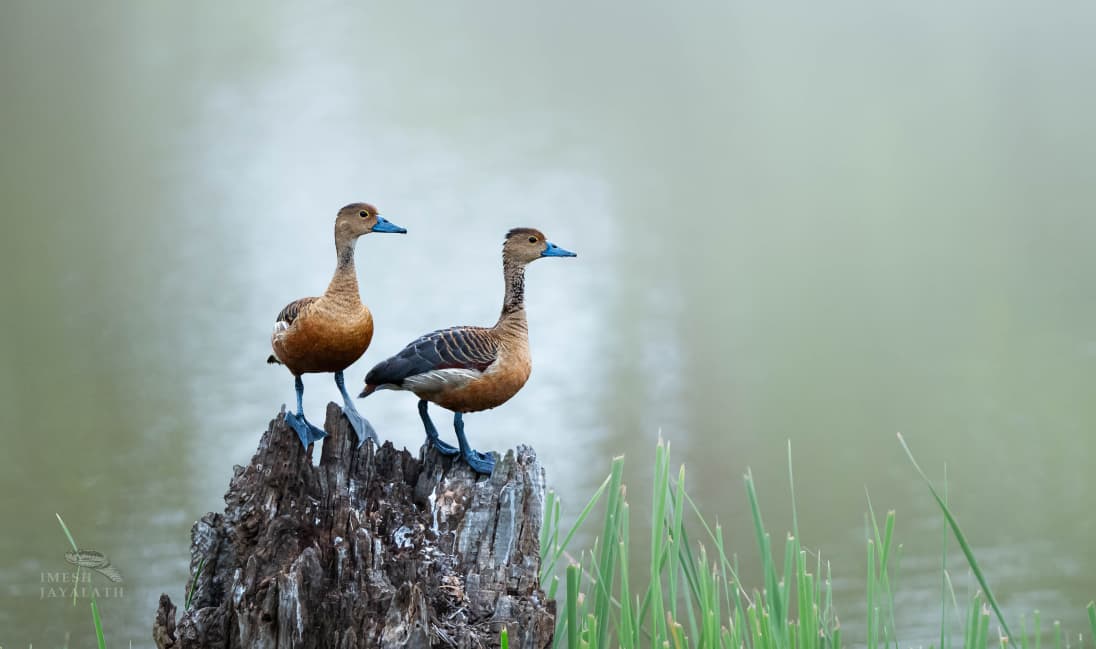
Lesser Whistling Duck (Dendrocygna javanica)
The Lesser Whistling Duck (Dendrocygna javanica), also known as the Indian Whistling Duck or Lesser Whistling Teal, is a medium-sized freshwater duck widely distributed across the Indian subcontinent and Southeast Asia, including Sri Lanka. It inhabits lakes, marshes, reservoirs, flooded grasslands, and paddy fields with dense aquatic vegetation, where it is often seen resting in large flocks during the day. This attractive duck is easily recognized by its rich chestnut-brown plumage, long neck, broad rounded wings, and distinctive orange-yellow eye ring. In flight, it produces a characteristic high-pitched, two-note whistling call, which gives the species its common name. Unlike most ducks, it frequently perches on tree branches and may even nest in tree hollows, while local movements are often influenced by rainfall and the availability of wetlands.
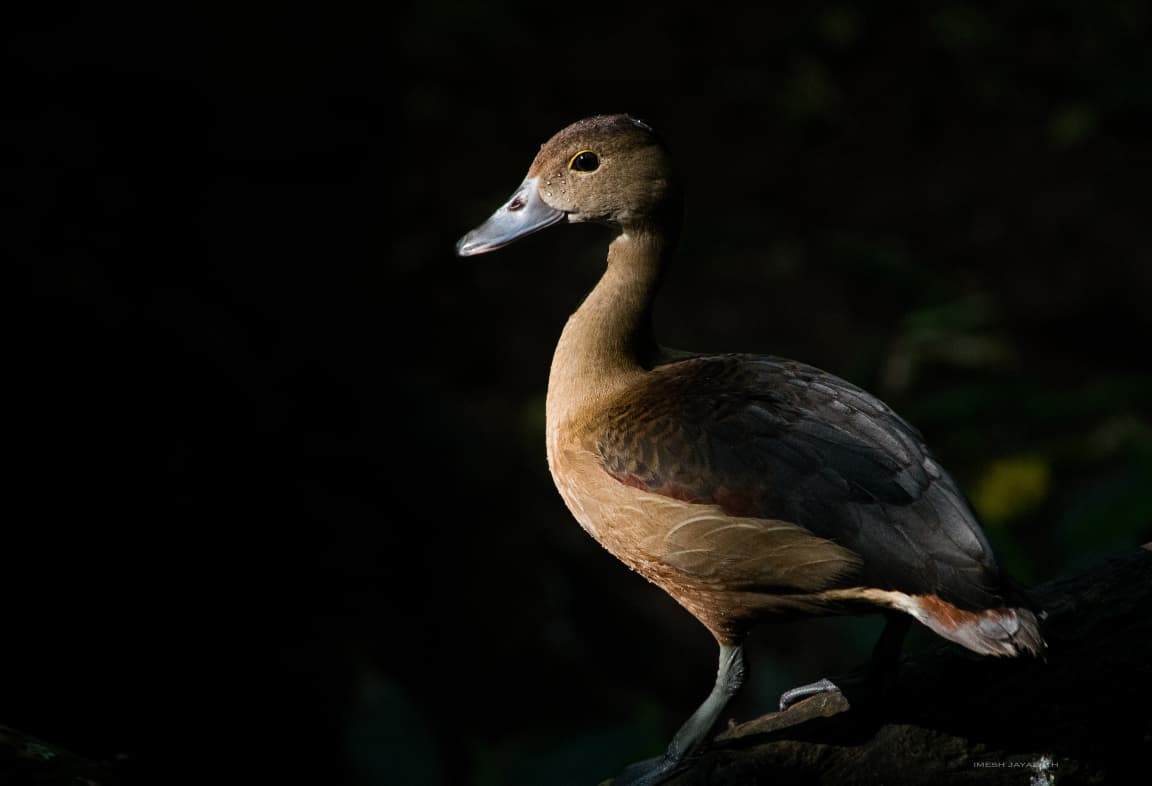
Lesser Whistling Duck (Dendrocygna javanica)
The Lesser Whistling Duck is primarily nocturnal, emerging at dusk to feed on aquatic plants, seeds, rice grains, and a variety of small aquatic animals, including insects, molluscs, worms, frogs, and small fish. It feeds by dabbling in shallow water and occasionally diving for food. Breeding generally coincides with the monsoon season when food is abundant, with both parents sharing incubation and caring for the ducklings. Nests are built in tree cavities, forks of large trees, abandoned nests of other birds, or sometimes among dense ground vegetation near water. Clutches usually contain 7–12 white eggs, which hatch after about 22–24 days, and the young are capable swimmers soon after hatching, sometimes even riding on the backs of their parents. The species is highly social, often gathering in large flocks outside the breeding season, and is currently classified as Least Concern due to its wide distribution and stable global population, although the conservation of freshwater wetlands remains essential for its long-term survival.