Contributor
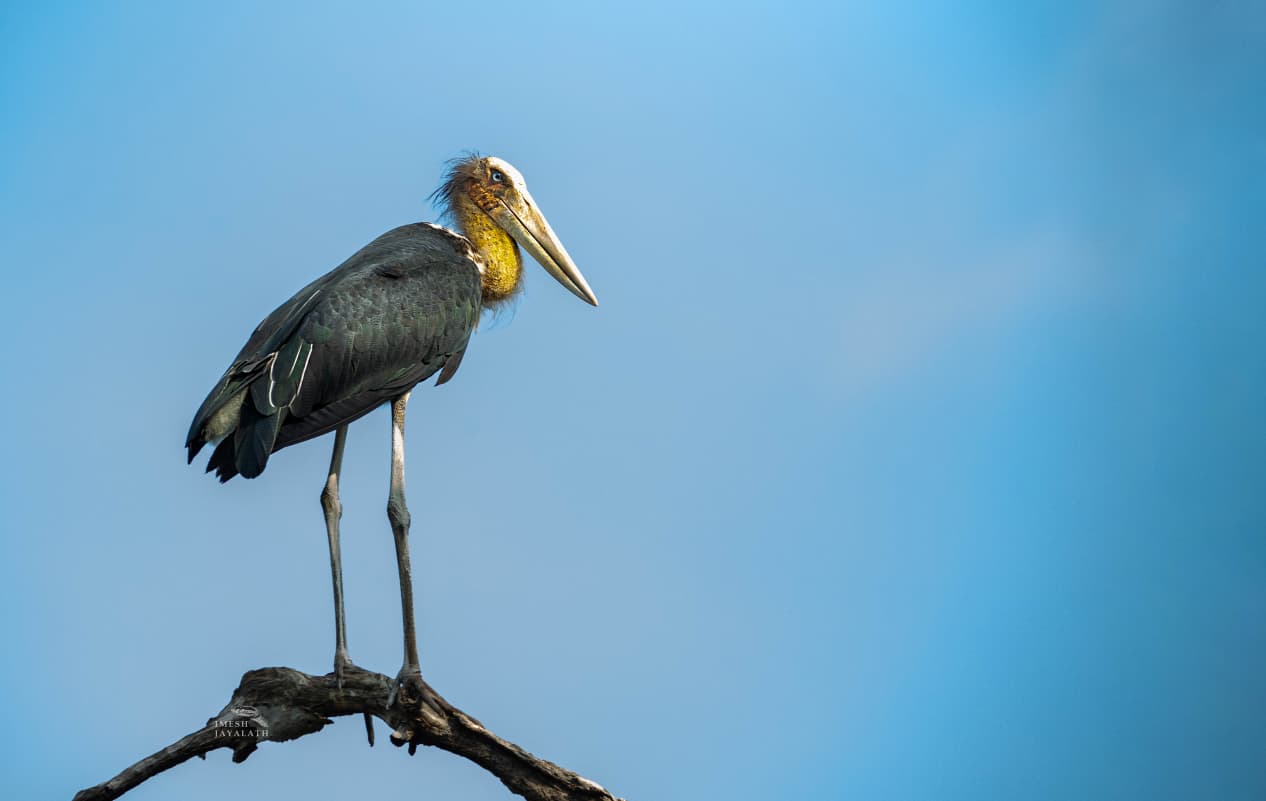
Lesser Adjutant
The Lesser Adjutant is a tall, solemn-looking stork that wanders quietly through the wetlands of India, Sri Lanka, Nepal, and Southeast Asia. With its bare head and neck, straight heavy bill, and dark upper plumage, it looks a lot like its larger relative—the Greater Adjutant—yet it is slimmer and more graceful, with a neater silhouette. Standing over a meter tall, it haunts rivers, mangroves, marshes, flooded paddy fields, and forested wetlands, often moving alone with slow, deliberate steps. In Sri Lanka it mostly lives in lowland protected areas, while in Nepal and parts of India it has surprisingly adapted to crop fields, sometimes thriving more in farmlands than in forests. Across its range it hunts by sight, picking up fish, frogs, reptiles, large insects, rodents, and even small mammals. Though usually silent, it clatters its bill, hisses, or gives hoarse calls during displays, especially when protecting a nest.
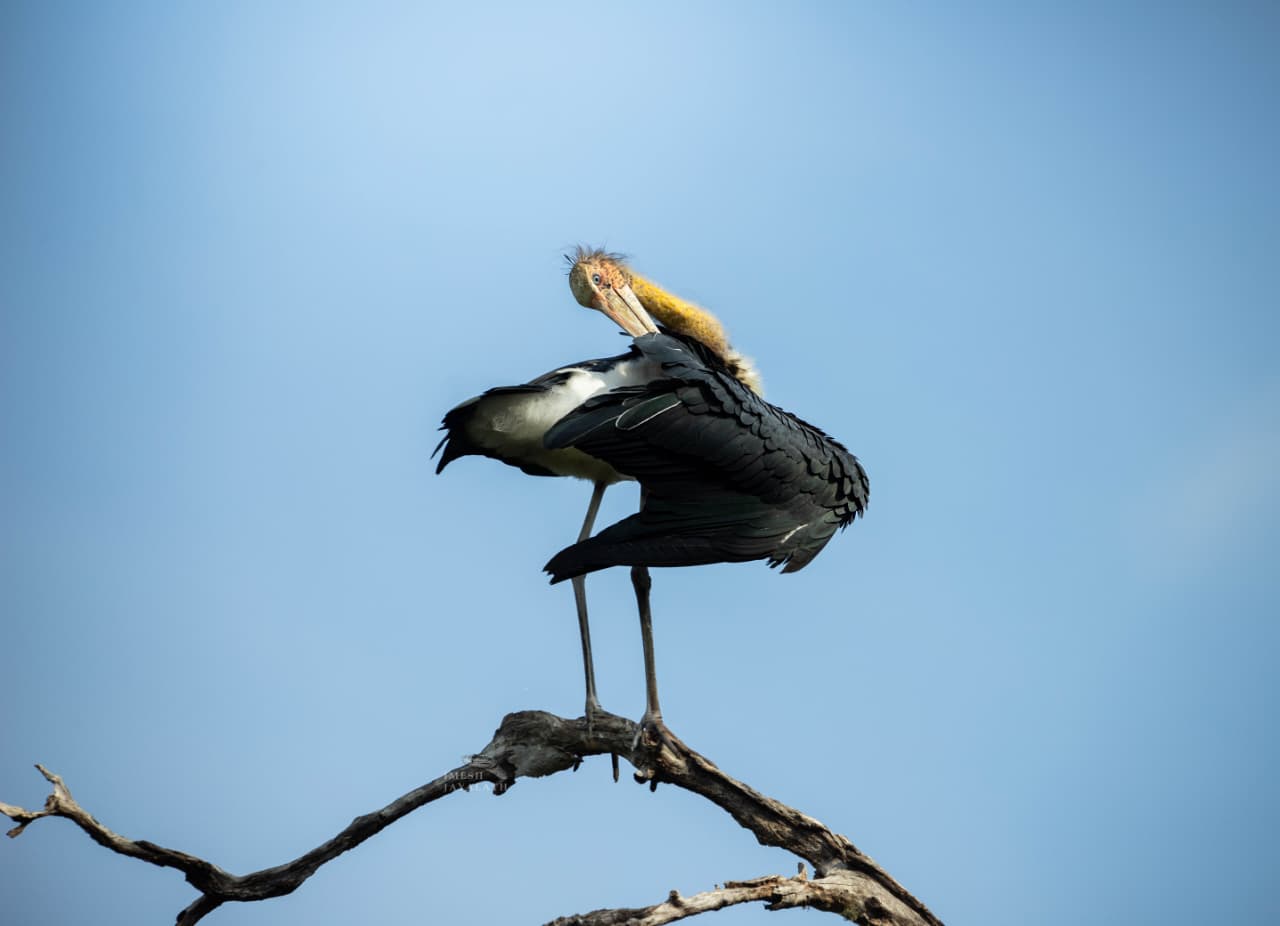
Lesser Adjutant
Breeding for this species is a patient and carefully timed process. Lesser Adjutants nest high in tall, non-domestic trees—often Bombax ceiba, Haldina cordifolia, or large figs—building huge platforms of sticks that can be more than a meter across. They gather in loose colonies of only a few nests, laying two to four eggs that take about a month to hatch. In Nepal and India, colony size, tree height, nearby wetlands, and even local farming patterns influence how well chicks survive; flooded rice fields in the monsoon and irrigated winter crops often provide excellent feeding habitat for parents. Adults may spend half an hour or more searching for food before returning to the nest, moving faster when chicks are small and slowing as they grow. Once considered “Vulnerable,” the species is now listed as “Near Threatened,” after new research revealed healthier populations and successful breeding in many agricultural landscapes. Still, hunting and wetland loss in Southeast Asia remain major threats to this impressive wetland giant.