Contributor

Indian pond heron (Ardeola grayii)
The Indian pond heron or paddybird (Ardeola grayii) is a small, widespread heron found across South Asia, including the Indian subcontinent, Sri Lanka, and parts of Southeast Asia. It is commonly seen around ponds, marshes, paddy fields, and even urban wetlands, though its excellent camouflage often makes it easy to overlook while it stands motionless at the water’s edge. In its resting state, the bird appears dull brown and olive with streaked plumage, but when it takes flight, it reveals striking bright white wings, creating a dramatic contrast. This sudden flash of colour has earned it many folk names and beliefs, including the idea that the bird is short-sighted, as it allows very close approach before flushing.
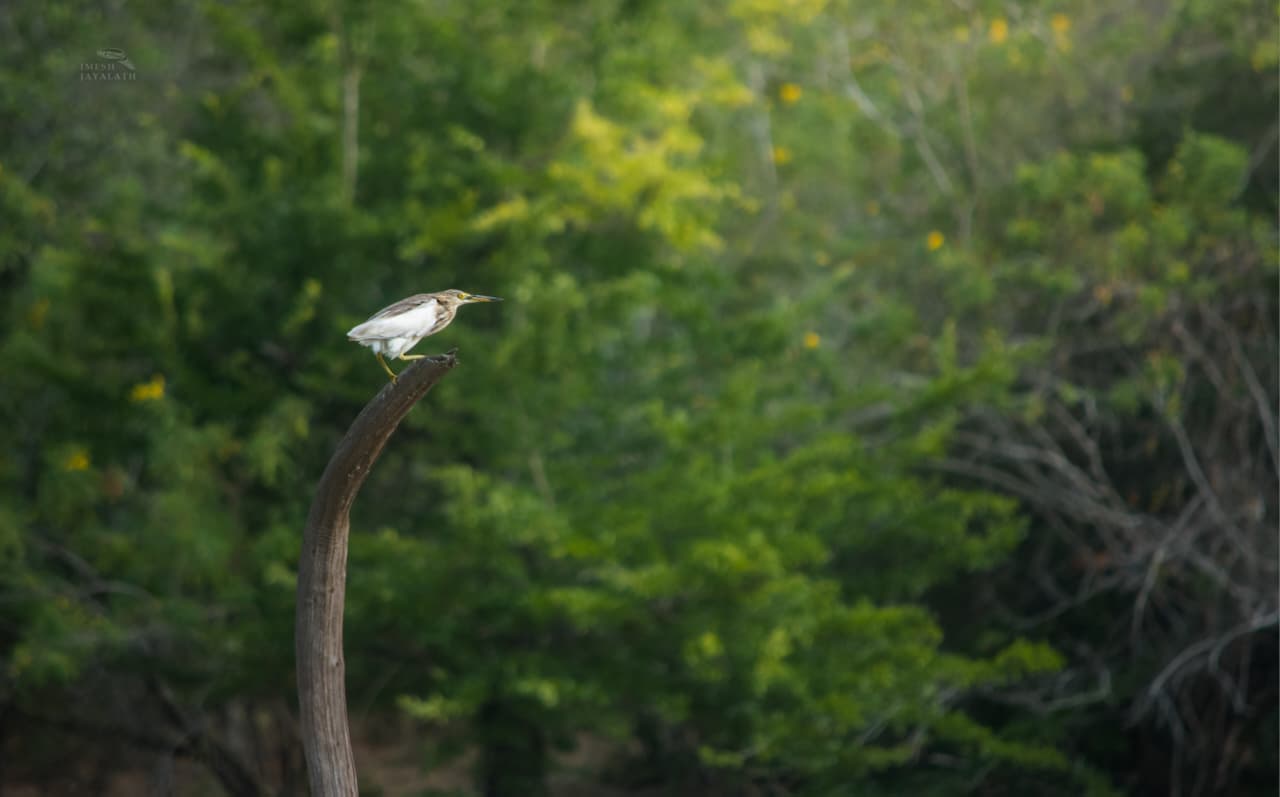
Indian pond heron (Ardeola grayii)
Indian pond herons are mostly solitary feeders, though they may gather in small numbers when food is abundant, especially during dry seasons. They feed on a wide range of prey such as fish, frogs, aquatic insects, crustaceans, and tadpoles, using patient stalking or clever techniques like baiting fish with floating objects. Breeding usually coincides with the monsoon season, when they nest semi-colonially in trees or shrubs, often alongside other waterbirds. The species lays three to five eggs, with both parents sharing incubation and chick-rearing duties. Adaptable, common, and closely associated with human-modified landscapes, the Indian pond heron remains classified as Least Concern, and continues to be an important and familiar bird in wetland ecosystems across its range.