Contributor
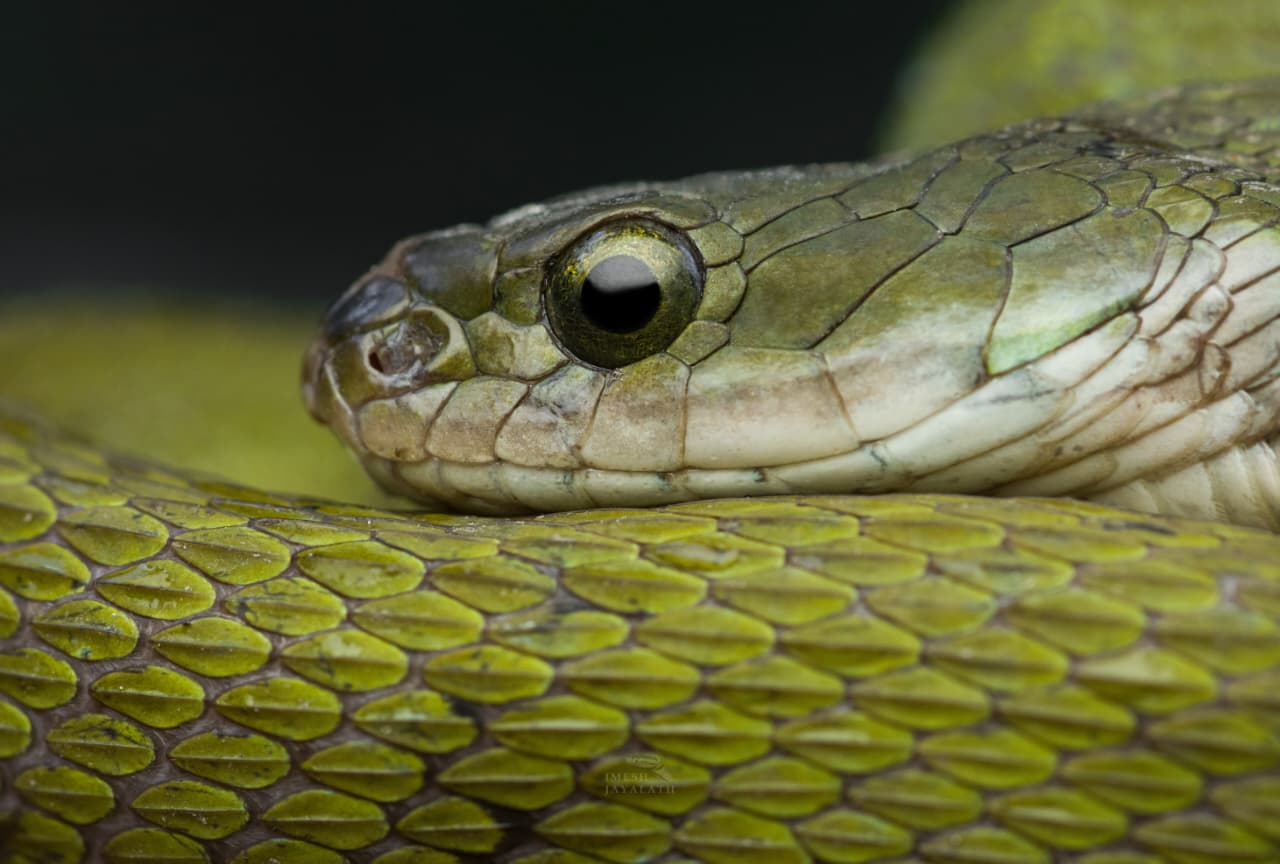
Green Keelback (Rhabdophis plumbicolor)
The Green Keelback (Rhabdophis plumbicolor), also known as the Lead Keelback, is a medium-sized, non-venomous snake belonging to the family Colubridae, occurring in Sri Lanka and parts of the Indian subcontinent. Although harmless to humans, its stout body and defensive posture often cause it to be mistaken for a viper. Adults typically reach about 60–75 cm in length and have a uniform olive-green to dull green body covered with strongly keeled scales, giving the skin a rough appearance. Juveniles are much more colourful, displaying a bright yellow or orange collar bordered by bold black V-shaped markings on the neck, black crossbars along the body and tail, and a dark stripe running from the eye to the corner of the mouth. In Sri Lanka, the species is commonly found in forest edges, grasslands, plantations, wetlands, home gardens, and hilly regions, ranging from the lowlands to montane elevations. It is mainly terrestrial but is often encountered close to streams, ponds, and other damp habitats where amphibians are abundant.
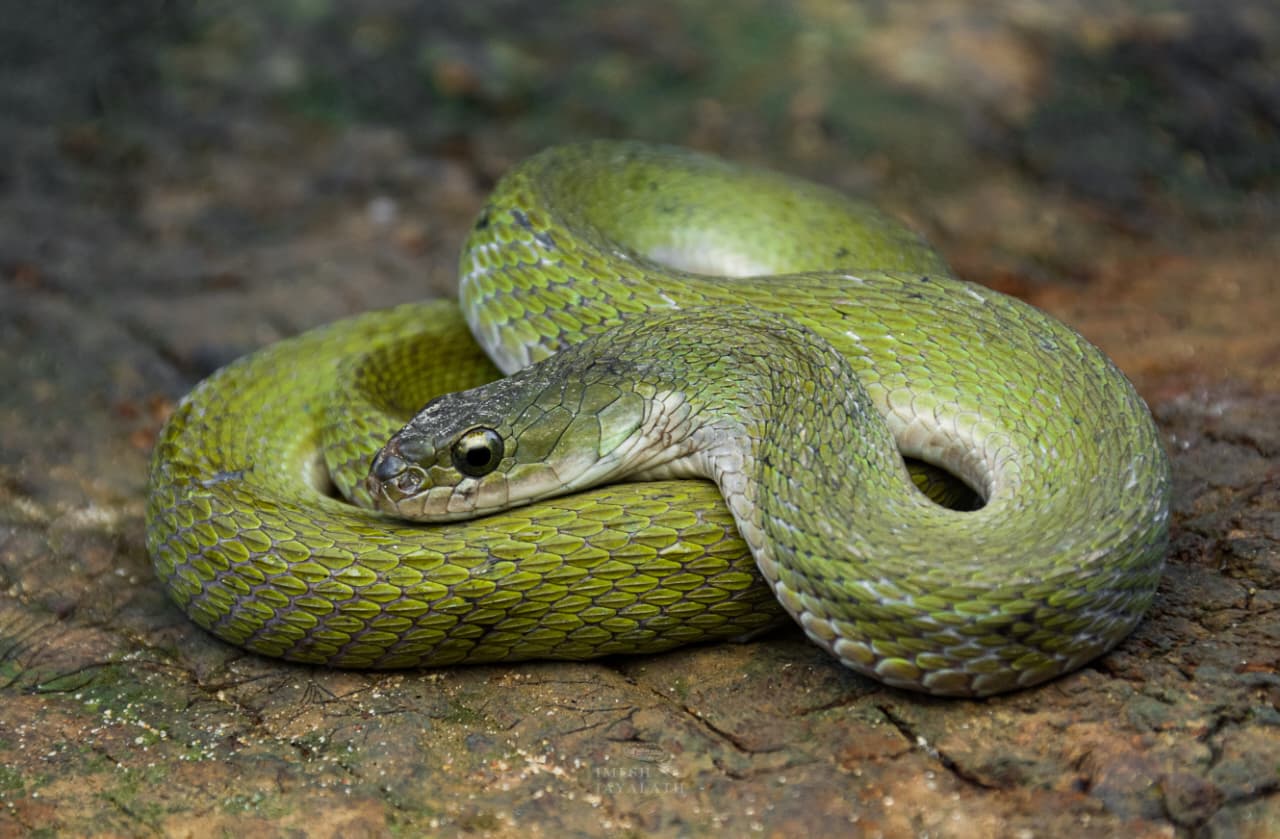
Green Keelback (Rhabdophis plumbicolor)
The Green Keelback is a diurnal and generally gentle snake that relies on camouflage to avoid predators. When threatened, it may flatten its neck and raise the front of its body in a cobra-like display or flatten its entire body against the ground to appear larger, but it rarely attempts to bite. Its diet consists primarily of toads, particularly toxic species that many other snakes avoid, although it may also feed on frogs and other small amphibians. Like several other members of the genus Rhabdophis, it is believed to possess specialized neck glands (nuchal glands) that contain defensive toxins obtained from its prey, providing additional protection against predators. The species is oviparous, with females laying eggs in moist, sheltered locations during the breeding season. Although it remains relatively widespread across its range, the Green Keelback depends on healthy wetland and forest-edge habitats, making habitat conservation important for maintaining stable populations.