Contributor
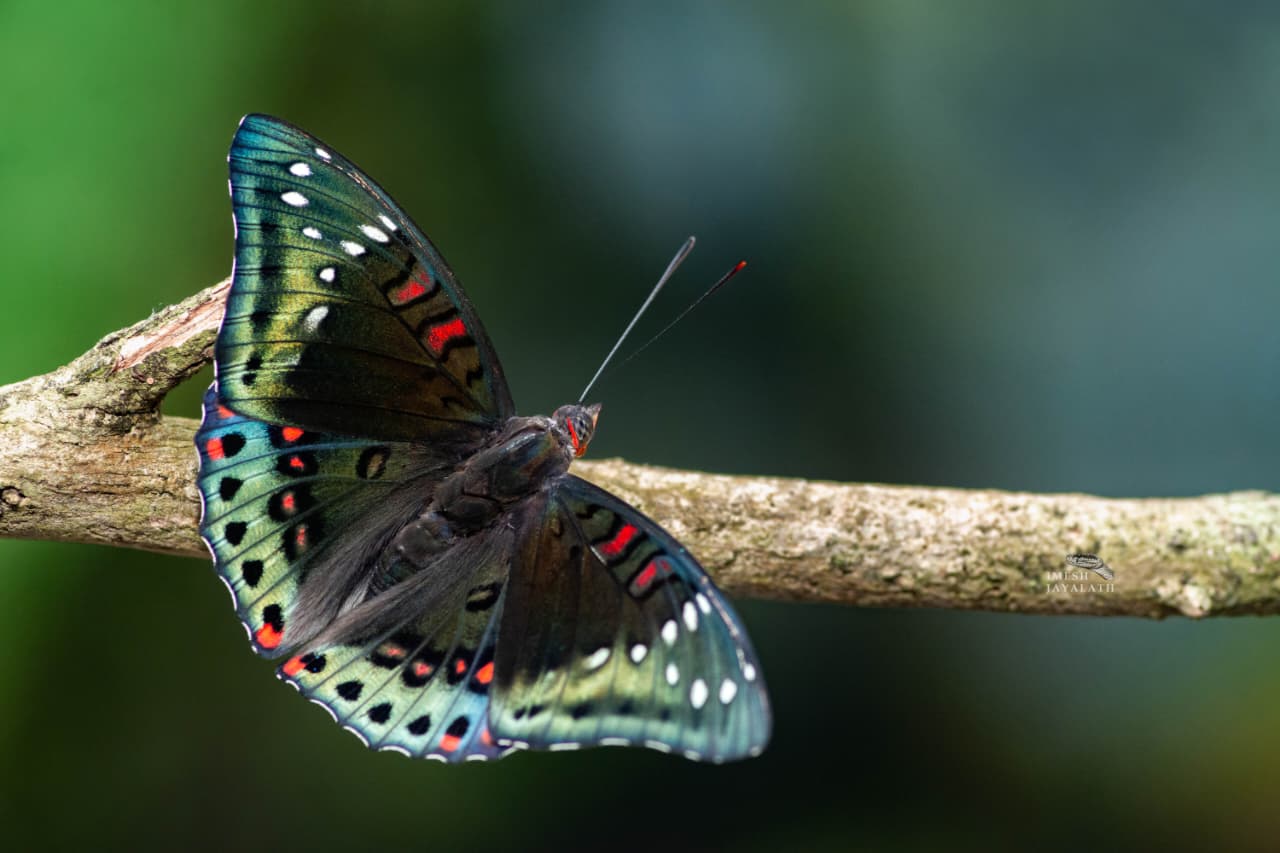
Gaudy Baron (Euthalia lubentina)
The Gaudy Baron (Euthalia lubentina) is a striking butterfly of the family Nymphalidae, widely distributed across South and Southeast Asia, including Sri Lanka, India, Bhutan, Myanmar, Cambodia, Thailand, Malaysia, Indonesia, and southern China. It inhabits tropical forests, forest edges, wooded gardens, and foothill regions, where it is most commonly seen flying along shaded paths or basking in patches of sunlight. Males are distinguished by their dark greenish-brown wings adorned with vivid crimson bands and white spots, while females are generally larger and paler, with broader white markings and a bluish-green sheen on the hindwings. The undersides of both sexes are richly patterned in shades of brown, crimson, and purple, providing excellent camouflage when resting with closed wings. This fast-flying butterfly is often encountered singly and feeds on tree sap, rotting fruits, animal droppings, and mineral-rich damp soil, only occasionally visiting flowers for nectar.
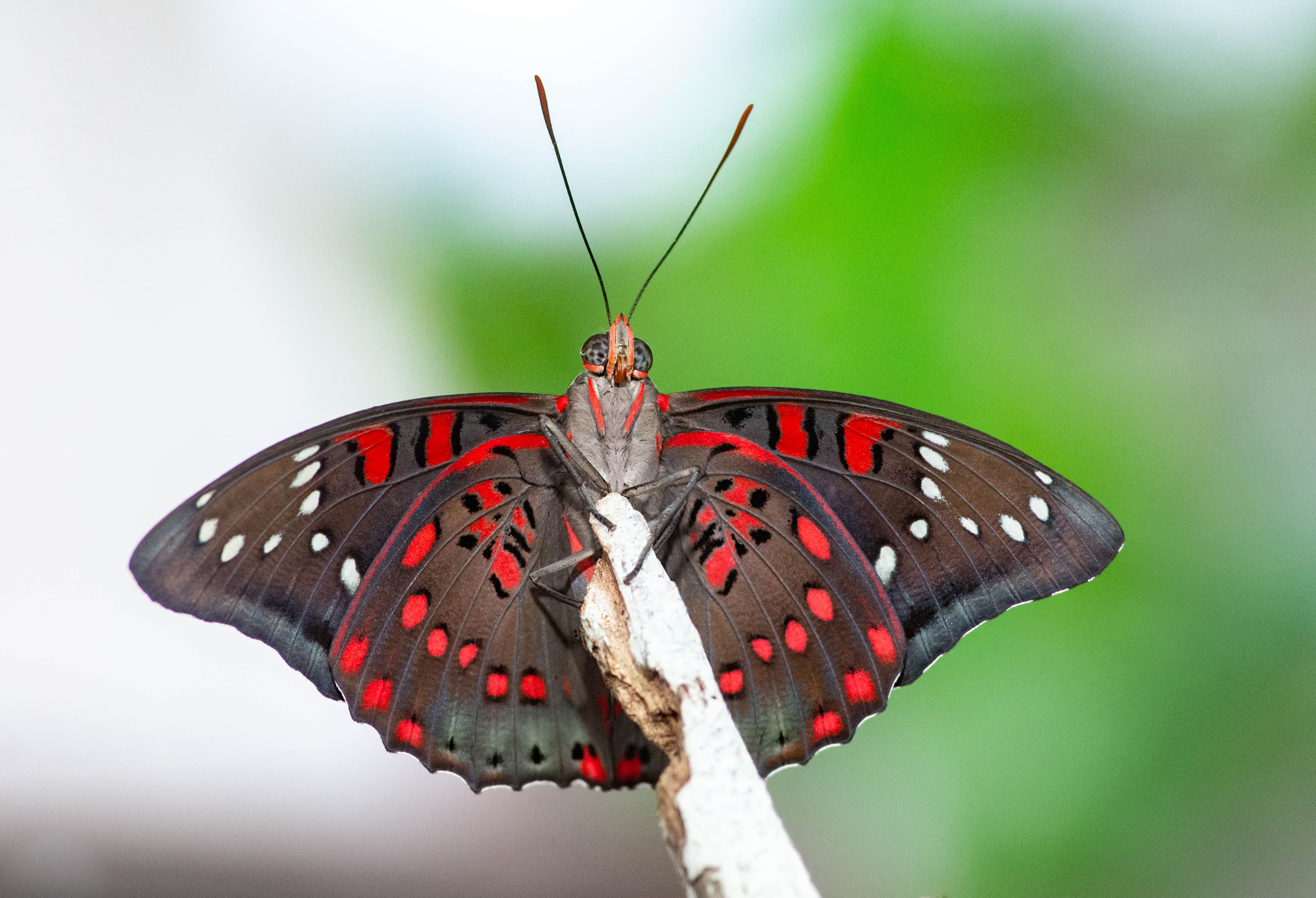
Gaudy Baron (Euthalia lubentina)
The life cycle of the Gaudy Baron consists of four stages: egg, larva, pupa, and adult. The eggs are reddish-brown and are laid on the leaves of host plants, mainly belonging to the family Anacardiaceae, including species of mango (Mangifera), Rhus, and Semecarpus. The caterpillar is bright green with distinctive branched spines and purplish-brown markings that provide effective camouflage among foliage, while the green chrysalis closely resembles a fresh leaf, helping it avoid predators. Adults are active throughout much of the year in suitable habitats, particularly during warmer months, and play an important ecological role as part of healthy forest ecosystems. Although the species is locally common and not currently considered threatened, the conservation of native forests and woodland habitats is essential for maintaining stable populations of this colourful butterfly across its range.