Contributor
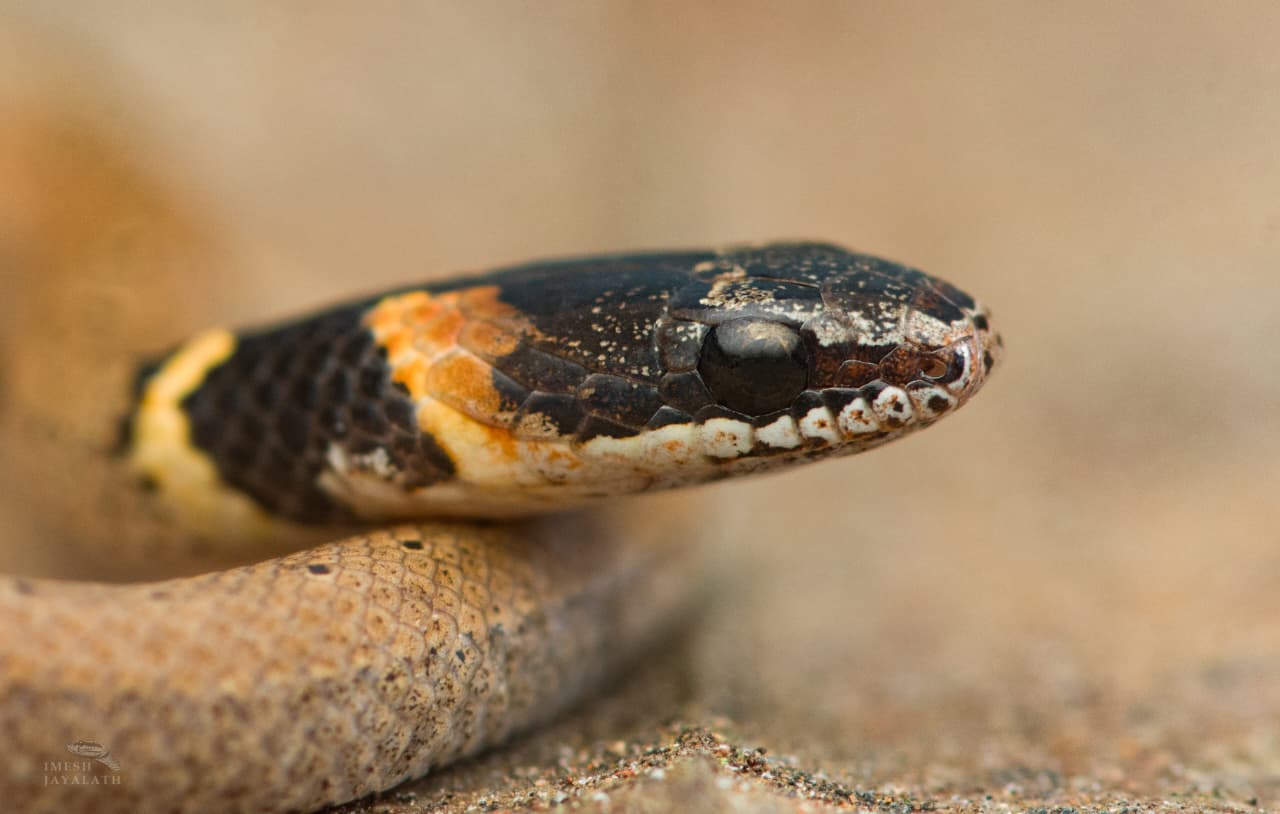
Duméril's Black-headed Snake (Sibynophis subpunctatus)
The Duméril's Black-headed Snake (Sibynophis subpunctatus), also known as Jerdon's Many-toothed Snake, is a small, slender, non-venomous snake belonging to the family Colubridae, distributed across Sri Lanka, India, Bangladesh, and Nepal. In Sri Lanka, it is found mainly in the western and south-western lowlands, particularly from Puttalam to Kalutara, inhabiting forests, home gardens, plantations, and moist leaf-litter habitats. Adults usually grow up to 45–46 cm in length and are distinguished by their glossy pale brown body marked with a row of small black spots along the back, a dark brown to black head and nape, and a striking yellow collar crossed by black markings. The lips and throat are yellow, while the underside is yellow with fine black spots along the edges of the scales. Its smooth scales, slender body, and relatively large eyes give it a graceful appearance, making it one of Sri Lanka's more distinctive small colubrid snakes.
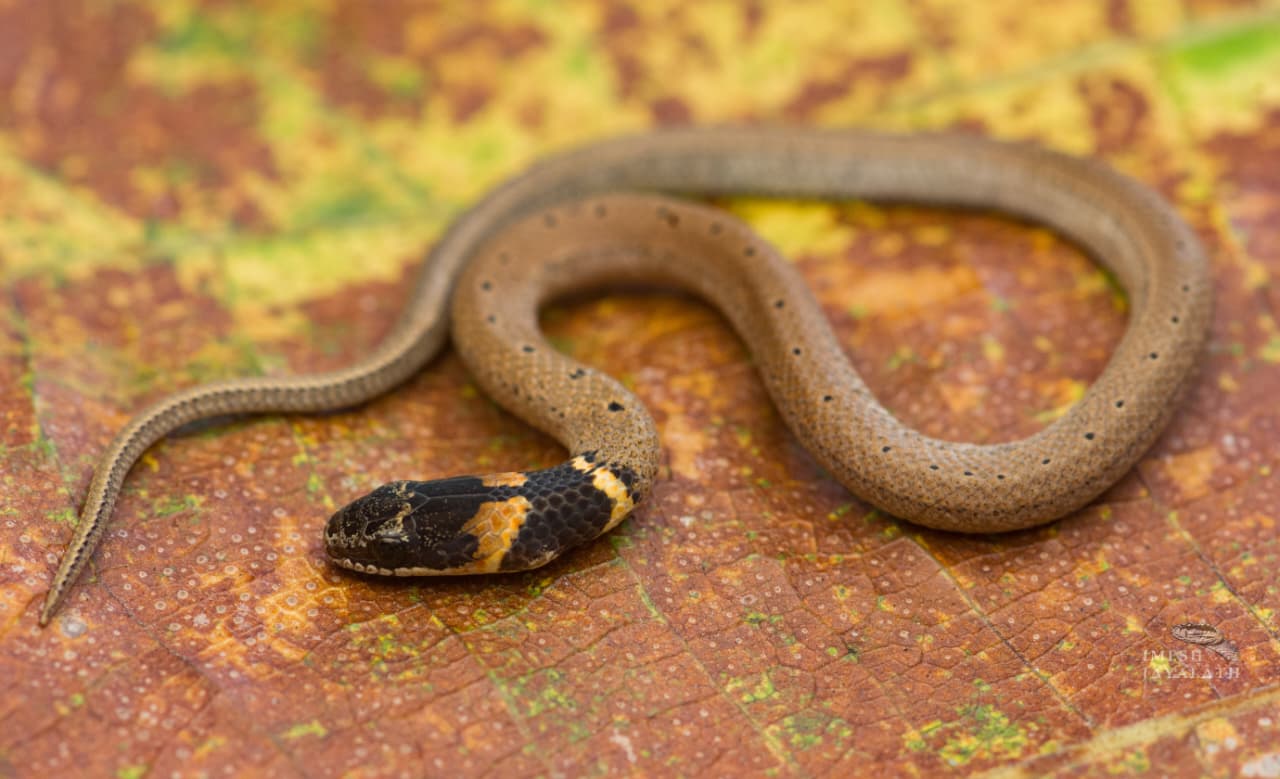
Duméril's Black-headed Snake (Sibynophis subpunctatus)
The Duméril's Black-headed Snake is a secretive, terrestrial species that spends much of its time beneath leaf litter, loose soil, rotting logs, stones, and other ground cover. Unlike many forest snakes, it is active both during the day and at night, emerging to hunt small reptiles, particularly geckos, skinks, and other small snakes, which it captures using its numerous small, backward-curved teeth. It is a shy and harmless species that rarely attempts to bite and instead relies on camouflage and concealment to avoid predators. Reproduction is oviparous, with females laying small clutches of eggs in moist, sheltered locations, although detailed information on its breeding biology remains limited. Despite being locally common in suitable habitats, the species is seldom encountered because of its secretive lifestyle, and the conservation of forest floor habitats and leaf litter is important for maintaining healthy populations throughout its range.