Contributor
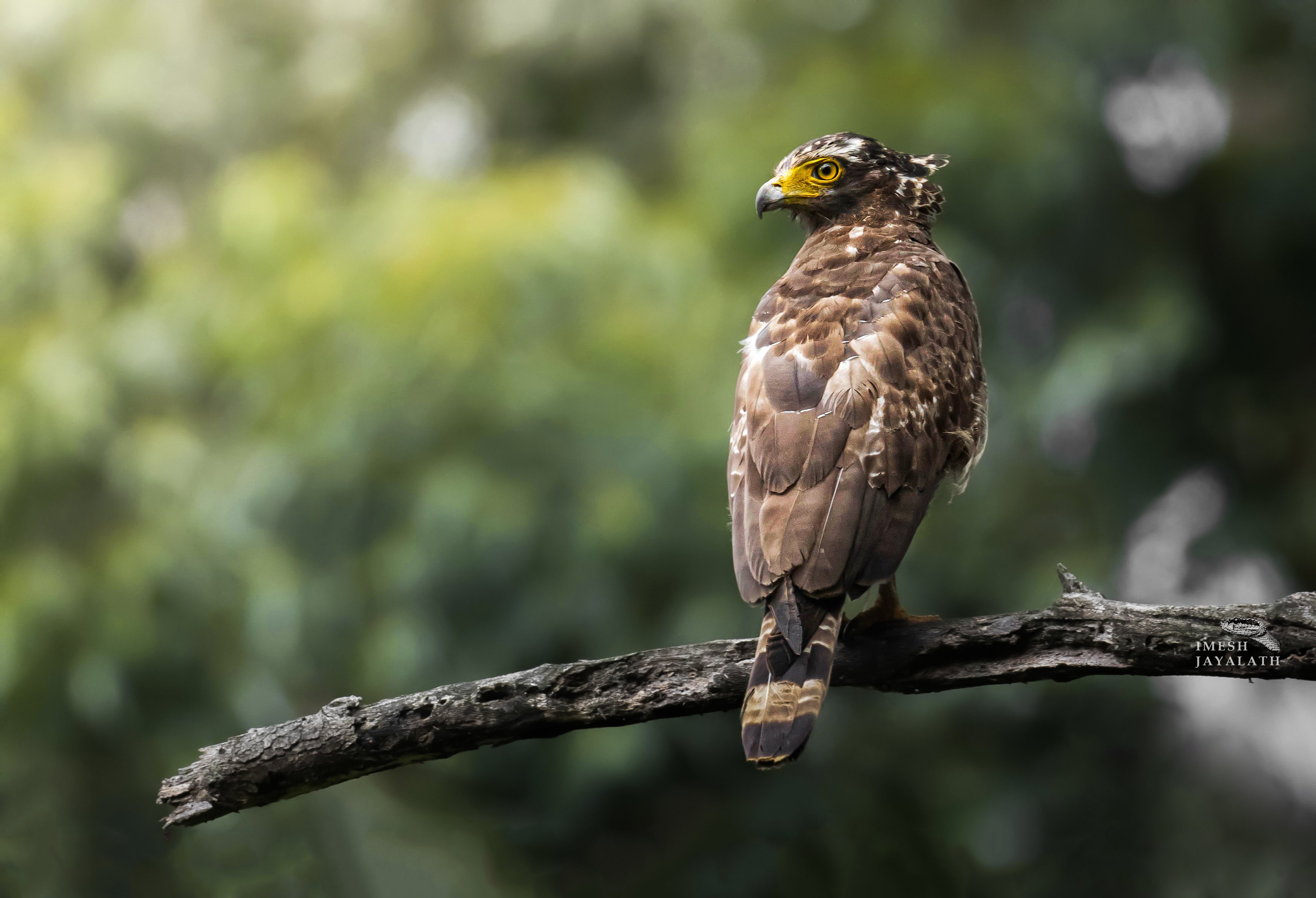
Crested Serpent Eagle (Spilornis cheela)
The Crested Serpent Eagle (Spilornis cheela) is a medium-sized to large forest-dwelling raptor distributed widely across tropical Asia, with considerable variation among its geographical forms. In Sri Lanka, the resident form is the Sri Lankan Crested Serpent Eagle (Spilornis cheela spilogaster), which can be encountered in habitats such as those of Yala National Park. It is a strongly built, dark-brown eagle with broad, rounded wings and a relatively short tail. One of its most distinctive features is the short, fan-shaped black-and-white crest at the back of the head, which can be raised when the bird is alarmed, giving the head a large, striking appearance. The face and cere are bare and yellow, as are the powerful, unfeathered feet, while the underparts are marked with whitish to yellowish-brown spotting. In flight, its broad wings are usually held in a shallow V, and the dark tail and flight feathers are crossed by conspicuous broad white bars, making the white wing and tail pattern particularly useful for identification from below. Across the various forms, adults show substantial differences in body size, with total length ranging roughly from 41–75 cm and wingspans from about 89–169 cm.
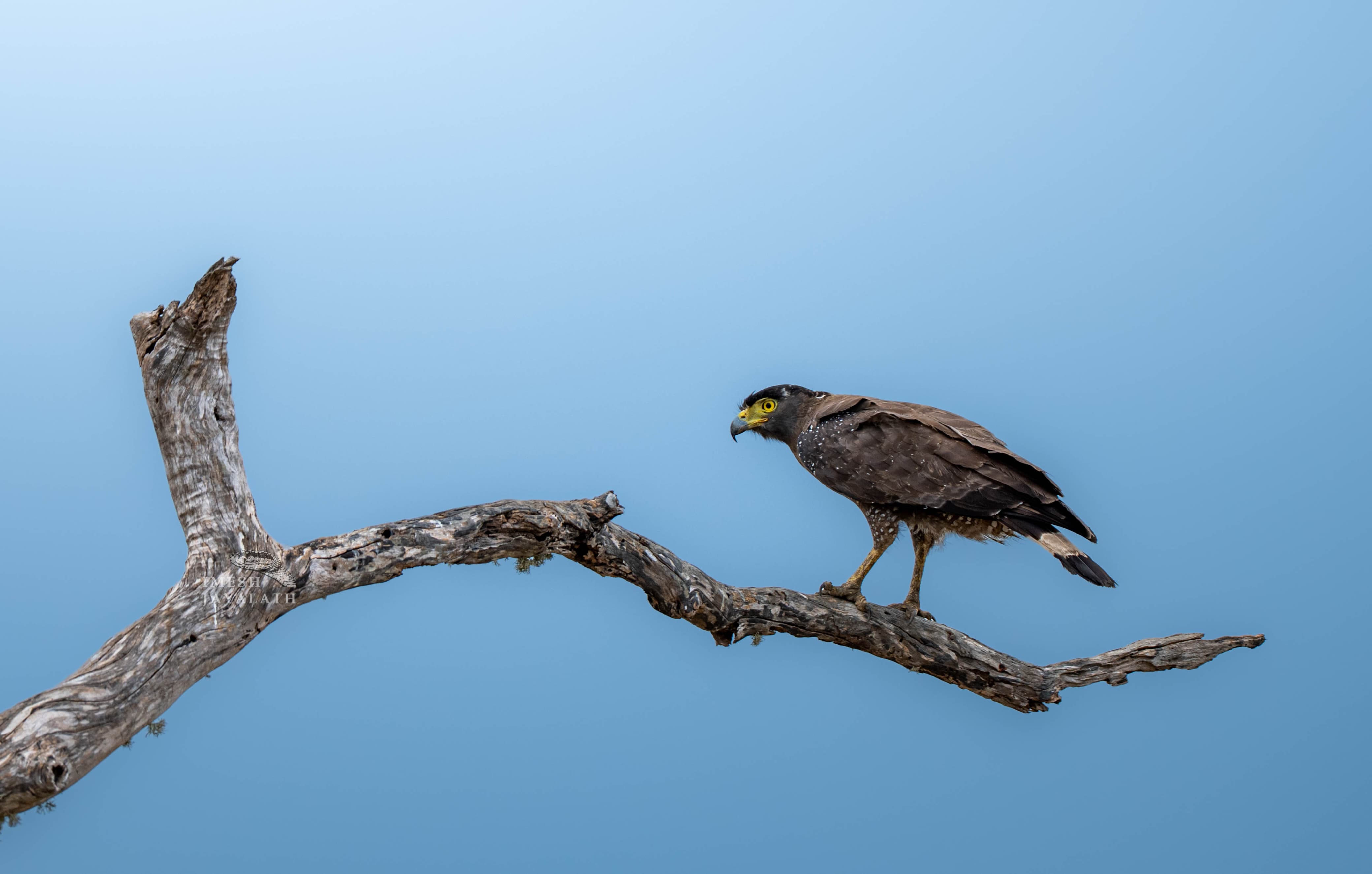
Crested Serpent Eagle (Spilornis cheela)
As its name suggests, the Crested Serpent Eagle is especially adapted to hunting reptiles and regularly takes snakes and lizards, although its diet can also include birds, amphibians, fish, mammals, large insects such as grasshoppers and locusts, termites, and large earthworms. It typically hunts from elevated perches within or around dense vegetation, using a patient sit-and-wait strategy, and may spend much of the day perched before making short hunting flights; it can also occasionally pursue snakes on the ground. The species generally inhabits forest, woodland, low hills and plains, often occurring near wetlands or open grassy areas where prey is abundant, and it commonly roosts deep within dense tree foliage. Its distinctive, piercing call is frequently heard from a favored perch, particularly during the late morning, while soaring birds may use rising thermals. Breeding usually begins toward the end of winter, with pairs establishing and defending territories before laying eggs in early summer. The nest is a large stick platform placed high in a tree, often near rivers or other suitable forested areas, and both adults participate in nest construction while the female performs most of the incubation and the male guards the nest and territory. Usually a single egg is laid, incubating for around 41 days, with the young remaining dependent in the nest for roughly two months before fledging. Through its specialized predation on snakes, lizards and other animals, this impressive raptor occupies an important position near the top of the forest food web.