Contributor
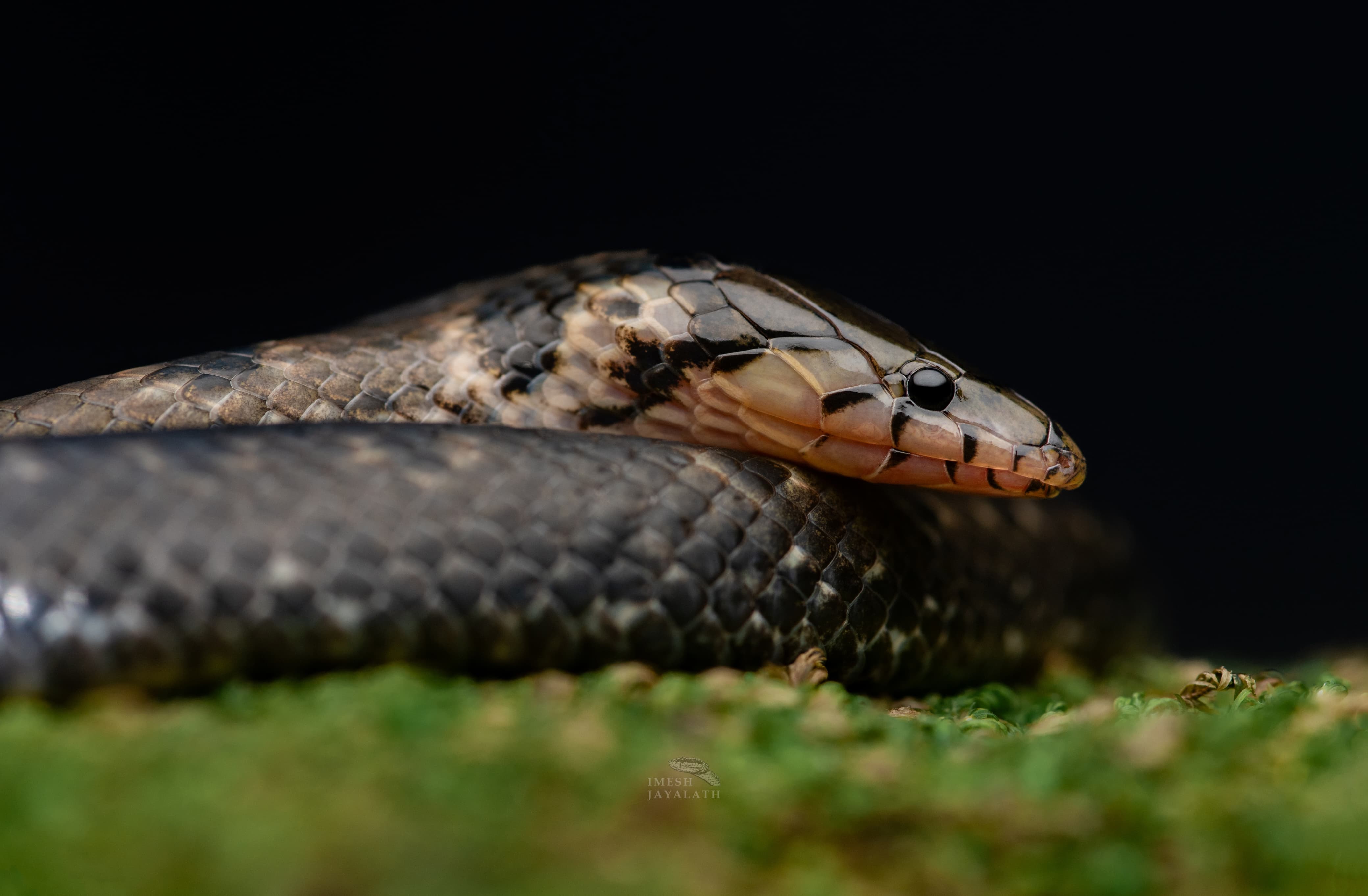
Cope’s Rough-sided Snake (Aspidura copei)
Cope’s Rough-sided Snake (Aspidura copei), also known in Sinhala as කලු මැඩිල්ලා (Kalu Medilla), is a small, burrowing colubrid snake endemic to Sri Lanka and primarily associated with the island’s central highlands. It has a cylindrical body and a relatively indistinct head that blends smoothly into the neck, giving it a compact, streamlined appearance suited to a burrowing lifestyle. Adults can reach approximately 63.5 cm in total length. The upper surface is predominantly brown, with a narrow brownish-olive mid-dorsal stripe extending along the body and bordered by a series of approximately 23–26 dark blotches on either side. Dark markings are also present along the flanks and extend toward the belly. The forehead is olive-brown, while the lips are pale yellow bordered with black, and a narrow dark stripe runs diagonally from the temporal region past the corner of the mouth toward the ventral scales. The underside is mottled greenish in appearance and bears a series of distinct darker blotches along the central belly line. Diagnostic scalation includes 17 rows of dorsal scales at midbody, absence of a preocular scale, two postocular scales contacting the parietal, approximately 123–137 ventral scales, and 15–35 subcaudal scales.
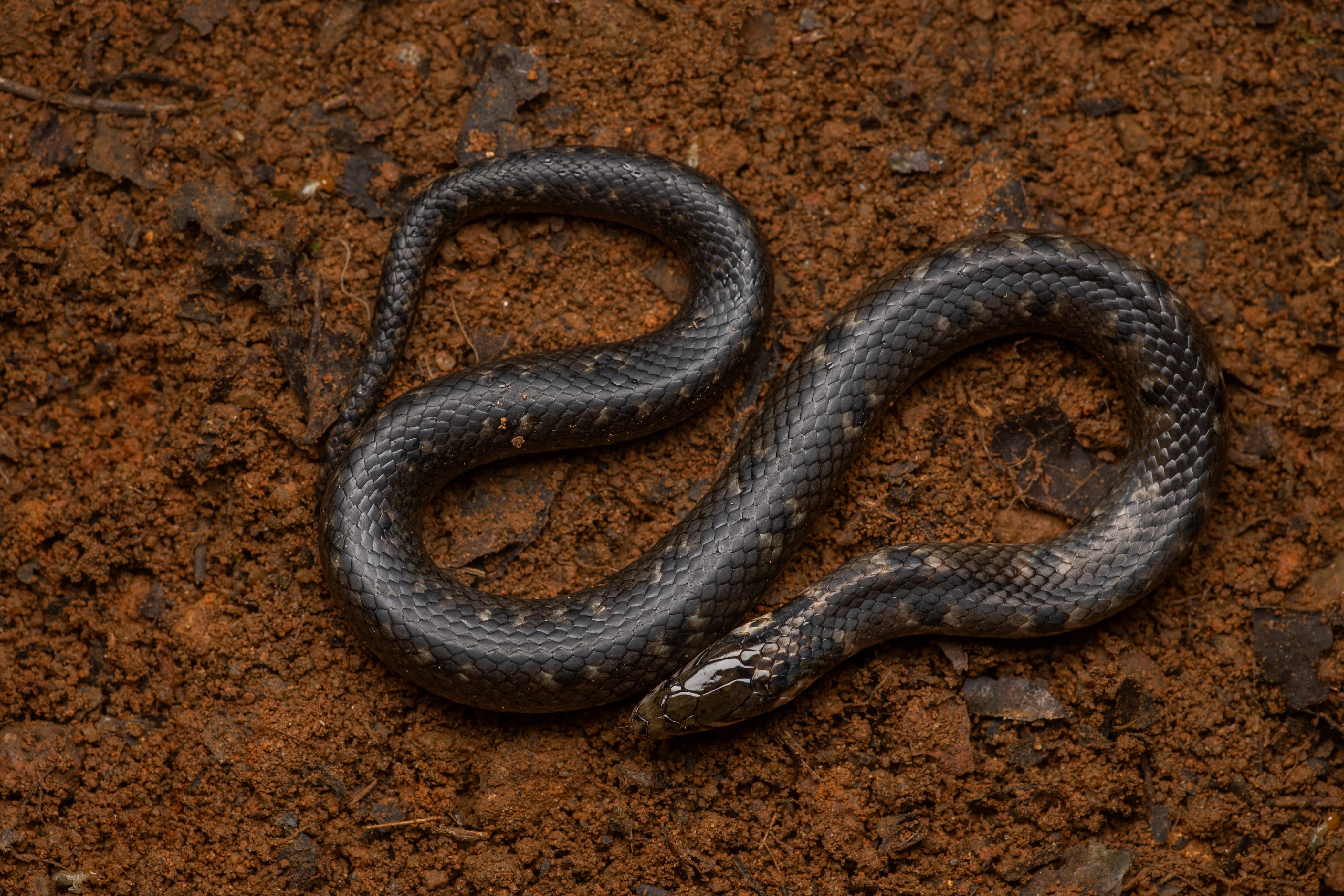
Cope’s Rough-sided Snake (Aspidura copei)
This species is principally a burrowing snake, and its secretive underground lifestyle means that it is not commonly encountered compared with more surface-active Sri Lankan snakes. It is restricted to the mountainous regions of central Sri Lanka, with recorded localities including Dimbulla, Dickoya, Hopewell Estate near Balangoda, Avissawella and Pundaluoya, reflecting its association with the island’s hill-country environments. Much of its natural history remains poorly documented, particularly its feeding ecology, daily activity and detailed habitat preferences. Reproductive information is also extremely limited; only a single female containing 21 unusually rounded eggs has been documented, so the normal clutch size, breeding season, incubation period and development of the young remain largely unknown. As a Sri Lankan endemic with a highly specialized, fossorial lifestyle, Aspidura copei represents one of the lesser-known members of the island’s distinctive snake fauna, and further field observations are important for understanding its distribution, ecology and conservation requirements.