Contributor
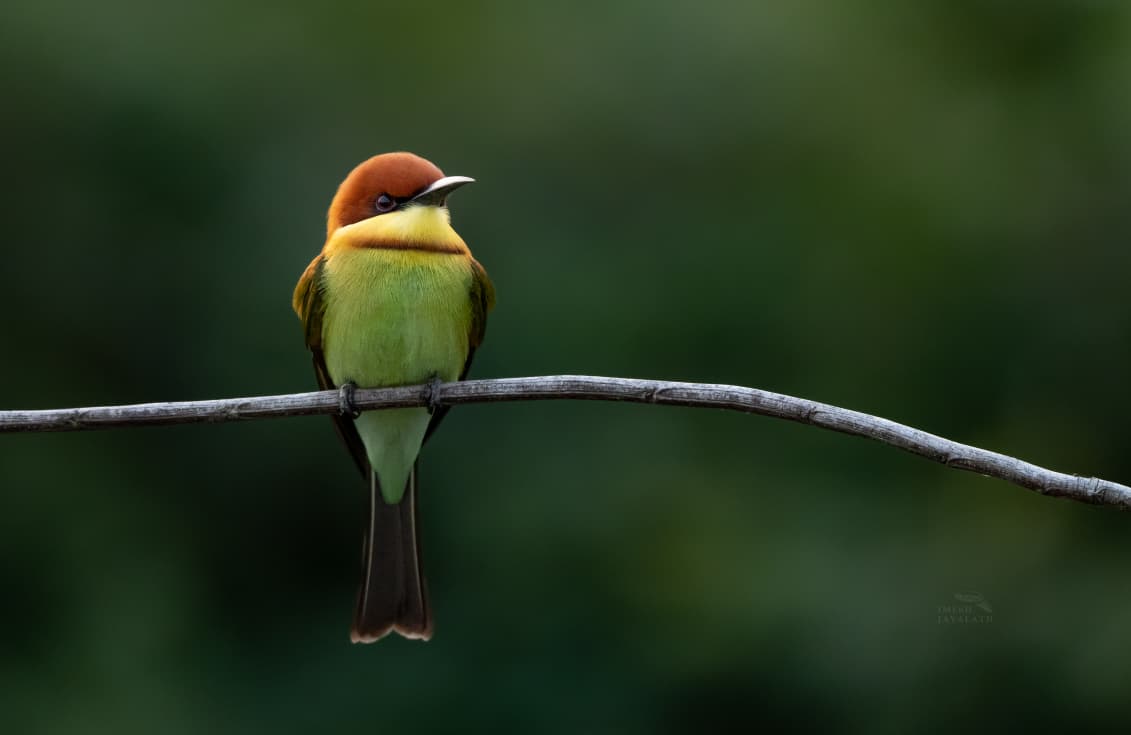
Chestnut-headed bee-eater
The chestnut-headed bee-eater (Merops leschenaulti), also known as the bay-headed bee-eater, is a striking and colourful bird widely found across the Indian subcontinent and Southeast Asia, including Sri Lanka. Slender and elegant, it is mostly green with flashes of blue on the rump and lower belly, a bright yellow face and throat, and a rich chestnut crown and nape that give the species its name. A sharp black eye stripe and a thin, curved black bill add to its bold appearance. Males and females look alike, while juveniles appear duller in colour. Unlike many other bee-eaters, this species lacks the long central tail streamers, giving it a compact and neat silhouette. It is most commonly seen in open woodland and forest edges, particularly in higher elevations, where its vivid colours stand out against the greenery.
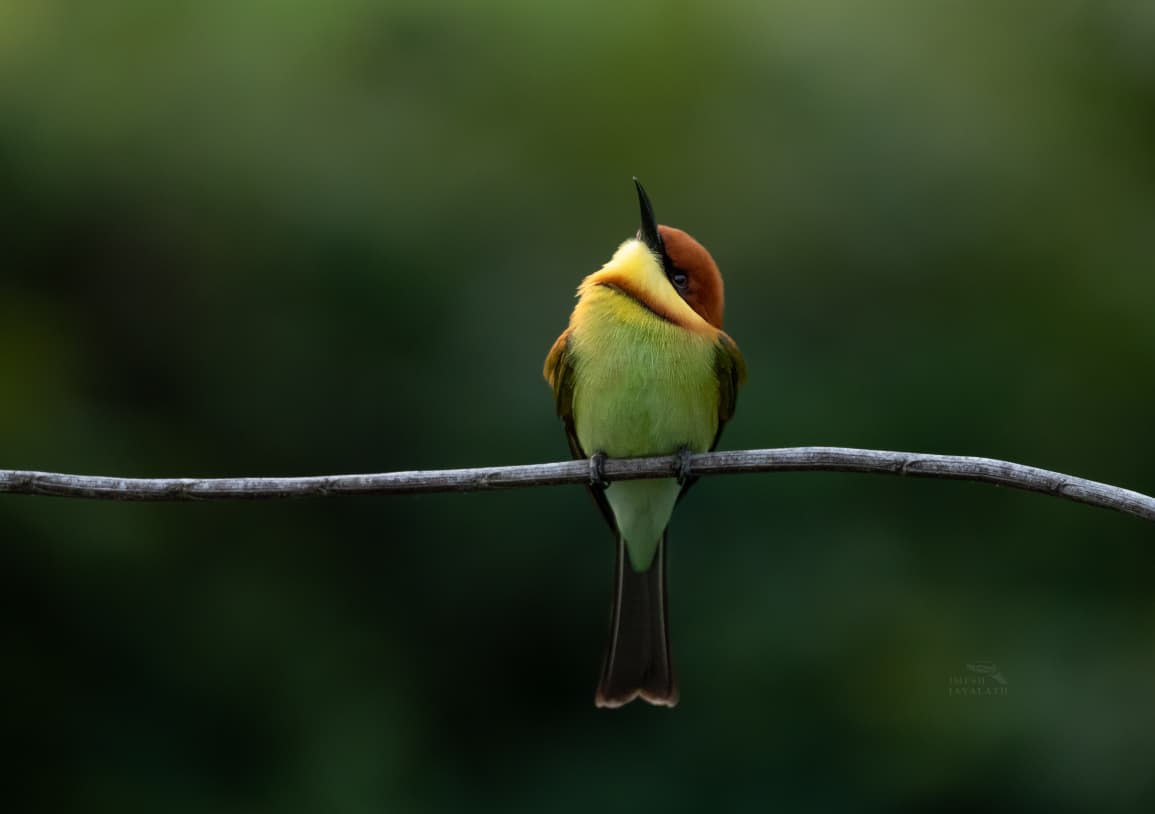
Chestnut-headed bee-eater
Highly social by nature, chestnut-headed bee-eaters are often seen feeding, resting, and roosting in small groups. They catch insects—especially bees, wasps, and hornets—mid-air with swift, agile flights launched from exposed perches, and on rare occasions, they have even been observed snatching fish over water. During the breeding season, they nest in small colonies, digging long tunnels into sandy banks where several white eggs are laid. Both parents share the duties of incubation and feeding the chicks. With their graceful flight, communal lifestyle, and vital role in controlling insect populations, the chestnut-headed bee-eater remains one of the most eye-catching and charismatic birds of the region.