Contributor
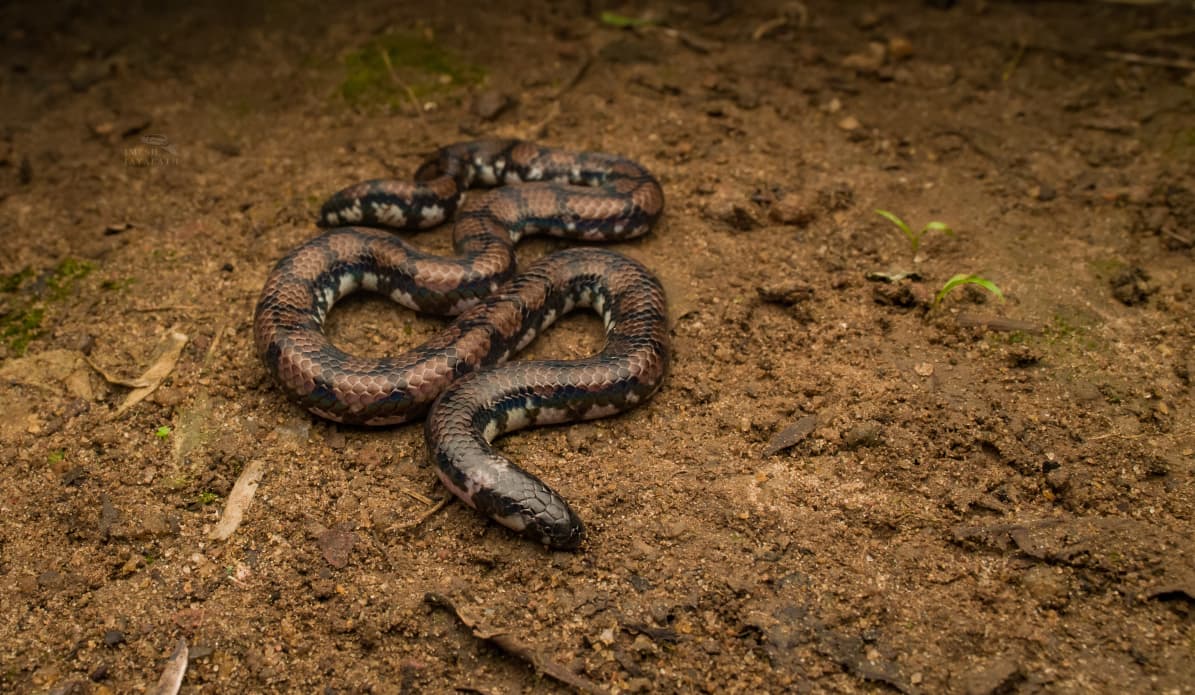
Ceylonese Cylinder Snake (Cylindrophis maculatus)
The Ceylonese Cylinder Snake (Cylindrophis maculatus) is a small, non-venomous, burrowing snake endemic to Sri Lanka and the only representative of the family Cylindrophiidae on the island. It is widely distributed from the lowlands to elevations of about 1,000 m, with records from Gampola, Peradeniya, Kandy, Pallekele, Elahera, and Nikaweratiya. This species is historically significant as the first reptile scientifically documented from Sri Lanka. Adults typically grow to about 35 cm in length and are easily recognized by their cylindrical body, smooth scales, and two rows of reddish-brown spots bordered by a black network along the back, with a distinctive white-and-black mottled underside. Primarily nocturnal and semi-fossorial, it spends the day concealed beneath rocks, decaying logs, leaf litter, or loose soil before emerging at night to hunt. Its diet consists mainly of other small snakes, including kukri snakes, rough-sided snakes, and earth snakes, although earthworms and insects are also consumed. When threatened, it displays a unique defensive behaviour by hiding its head beneath its coils while flattening and curling the brightly patterned tail upward to distract predators. Unlike most snakes, the Ceylonese Cylinder Snake is ovoviviparous, giving birth to 1–15 fully developed live young instead of laying eggs.