Contributor
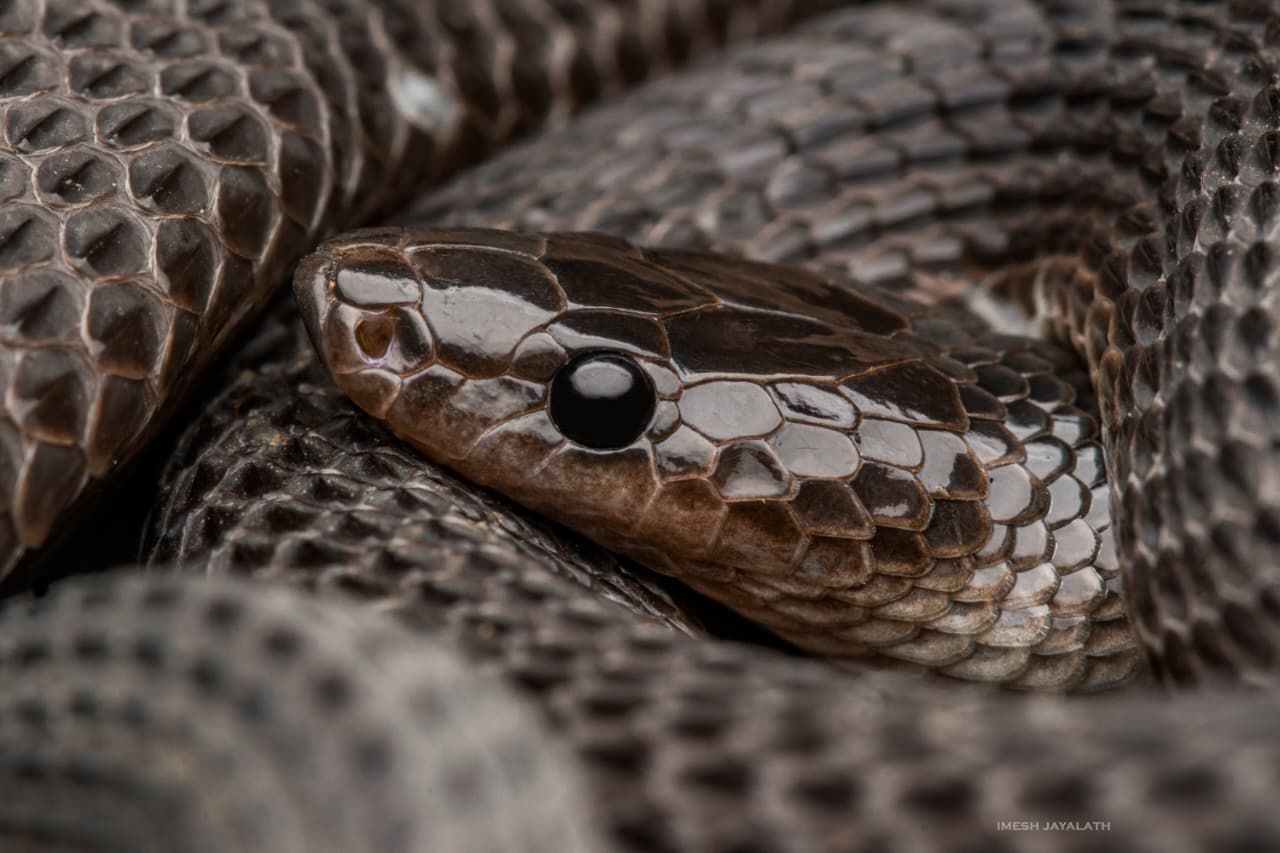
Ceylon wolf snake (Lycodon carinatus)
The Ceylon wolf snake (Lycodon carinatus) is a non-venomous snake belonging to the family Colubridae and is endemic to Sri Lanka. Locally, it is known as දාර කරවලා (Daara Karawala) or දාර රදනකයා (Daara Radanakayaa) in Sinhala. This species is often mistaken for venomous kraits because of its dark body with pale bands, especially when young. The body is usually black or dark brown with distinct white or pale rings, which may fade or become less clear in older individuals. Its scales are strongly keeled, giving the snake a rough, dull appearance. It typically has 17–19 scale rows at midbody, with 180–202 ventral scales and 42–64 undivided subcaudal scales, features that help distinguish it from similar species.
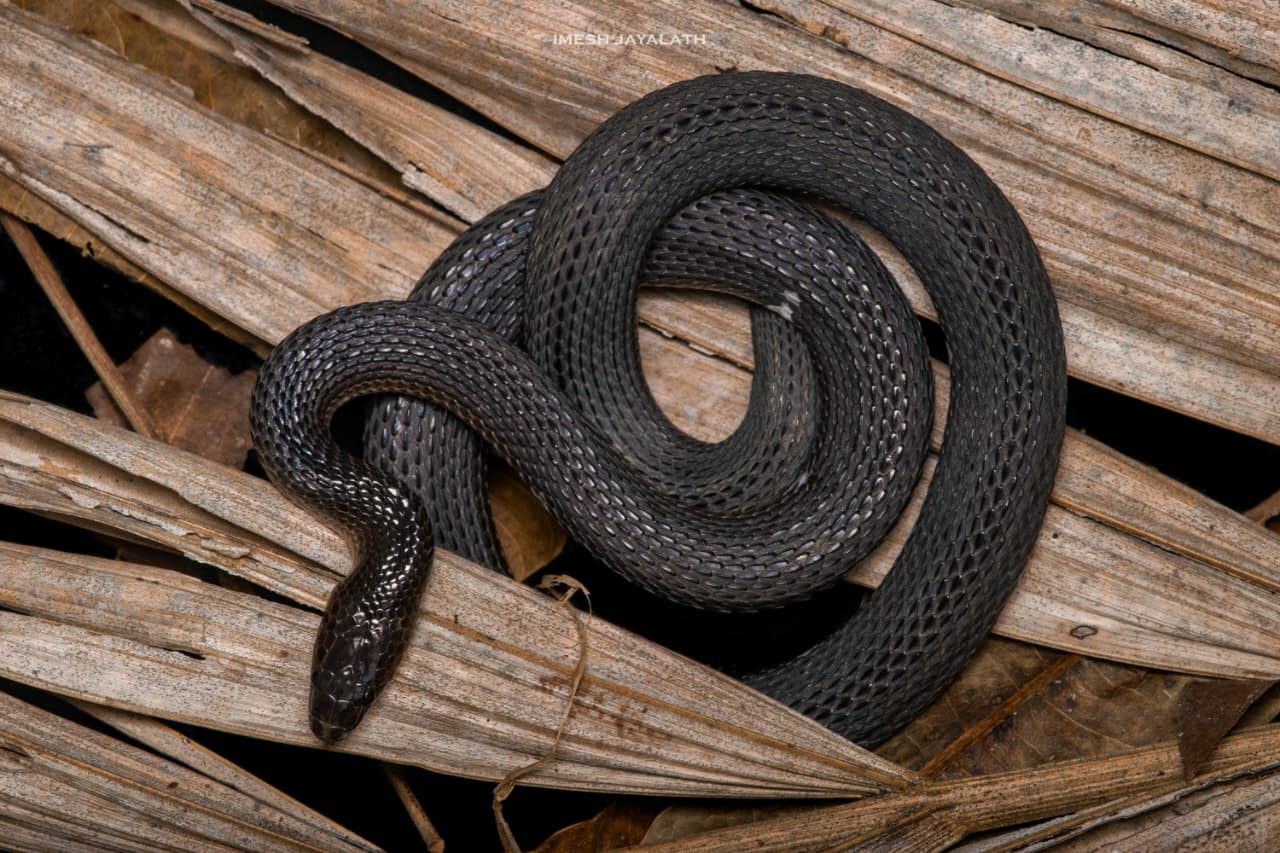
Ceylon wolf snake (Lycodon carinatus)
This snake is nocturnal and terrestrial, spending the daytime hidden under rocks, logs, rubble, or within forest leaf litter. It is commonly found in forested areas as well as near human settlements, where it hunts geckos and skinks around houses. Its diet mainly includes frogs, lizards, skinks, and occasionally small non-venomous snakes. Lycodon carinatus is oviparous, with females laying around 4 to 7 eggs at a time. Taxonomically, the species was previously placed in the genus Cercaspis, but molecular studies led to its reassignment to the genus Lycodon in 2013. Although harmless to humans, its krait-like appearance often leads to unnecessary killing, making awareness important for its conservation.