Contributor
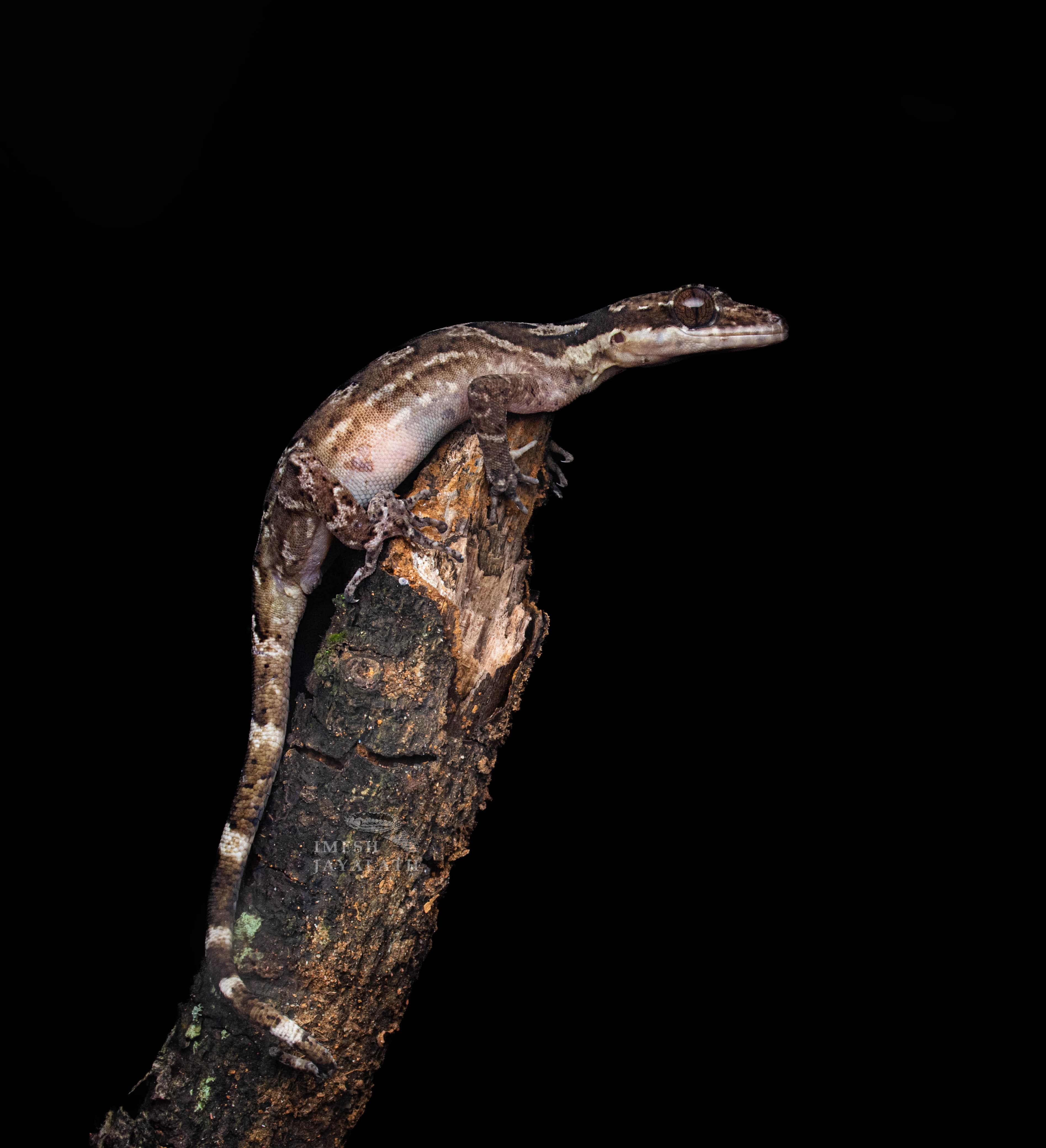
Bridled Bent-toed Gecko (Cyrtodactylus fraenatus)
The Bridled Bent-toed Gecko (Cyrtodactylus fraenatus), also known as the Sri Lanka Bent-toed Gecko, is a large, nocturnal gecko species endemic to the central highlands of Sri Lanka. It is primarily found in the island's mid-elevation forests, with recorded localities including Peradeniya, Gampola, Menikdena, and the Hakgala Strict Nature Reserve. This arboreal species inhabits mature forests, where it spends most of its time on tree trunks, branches, and other elevated perches, although it is also known to bask in direct sunlight during the day. It has a broad, robust head, a long slender tail that exceeds the length of the body, and olive-brown to chocolate-brown coloration marked with four to five distinctive W-shaped dorsal bands that provide effective camouflage against tree bark. Males possess 4–6 pre-anal pores arranged in a wide angle, a characteristic used for identification. Like other bent-toed geckos, it is an agile predator that feeds mainly on insects, spiders, and other small invertebrates, playing an important role in controlling forest arthropod populations. Females typically lay two hard-shelled eggs measuring approximately 15 × 17 mm in sheltered crevices or beneath loose bark, where they develop until hatching. Although this species is locally common in suitable habitats, its survival depends on the conservation of Sri Lanka's remaining montane and submontane forests, making the protection of these ecosystems essential for the long-term persistence of this endemic reptile.