Contributor
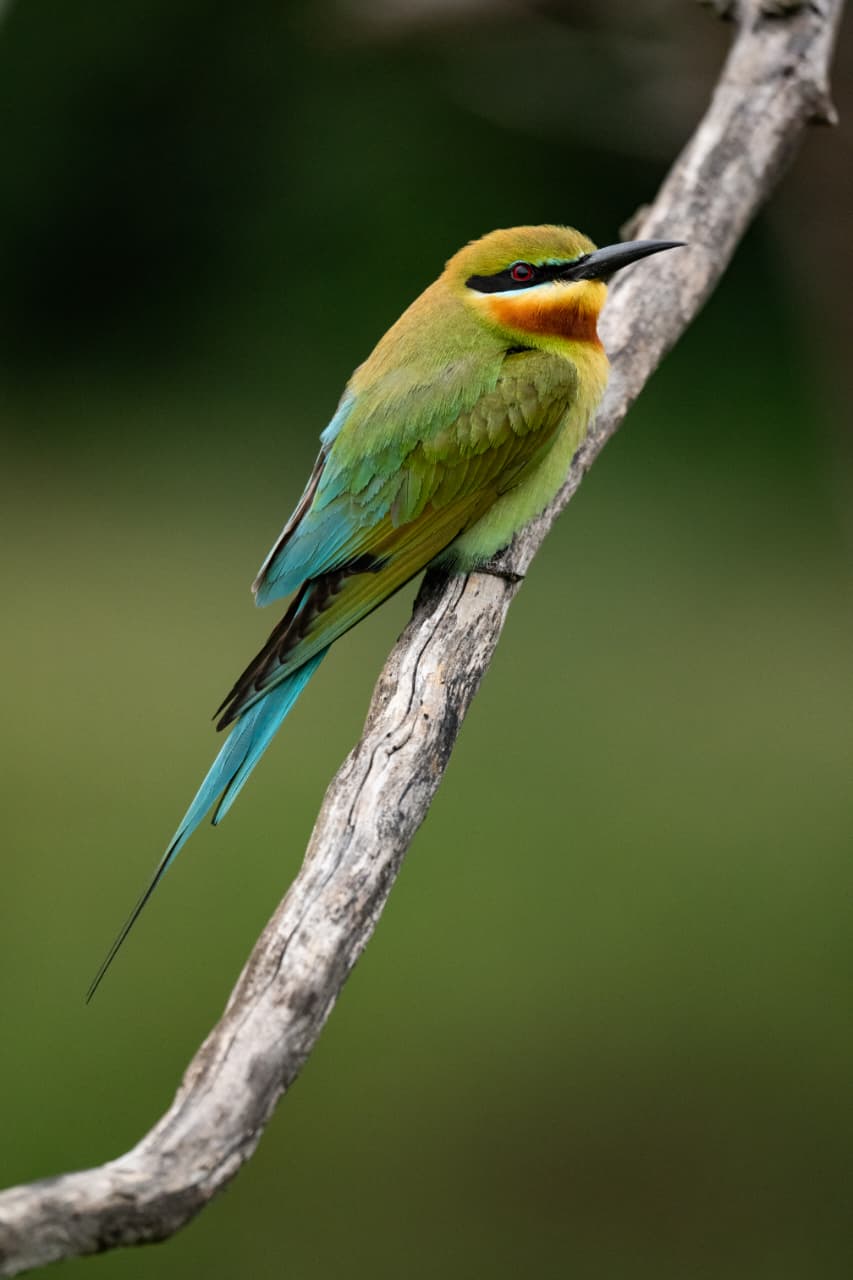
Blue-tailed Bee-eater (Merops philippinus)
The Blue-tailed Bee-eater (Merops philippinus) is a striking and colorful bird widely distributed across South and Southeast Asia. It is commonly found in open habitats near wetlands, rivers, lagoons, and coastal areas, where it perches conspicuously while searching for prey. This slender bird is predominantly green, with a blue tail, a narrow blue facial patch, a black eye stripe, and a chestnut-brown throat. Adults possess elongated central tail feathers, while juveniles appear duller and lack these streamers. The species feeds mainly on flying insects such as bees, wasps, hornets, and dragonflies, which are skillfully captured in mid-air before being beaten against a perch to remove stings and hard body parts. Blue-tailed Bee-eaters are highly social birds, often feeding, roosting, and migrating in groups, and are known for their distinctive rolling, whistling calls.
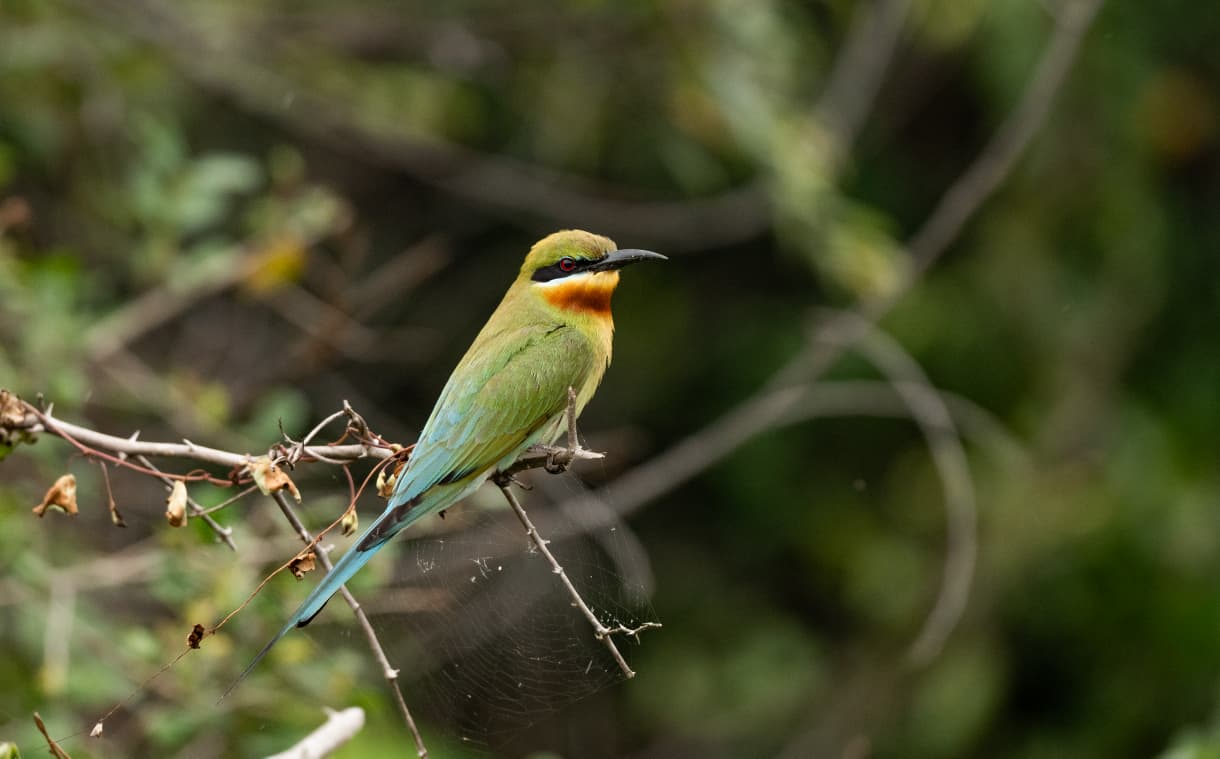
Blue-tailed Bee-eater (Merops philippinus)
This species breeds colonially, excavating long nesting tunnels in sandy riverbanks, coastal dunes, or exposed soil banks, where both parents share incubation and chick-rearing duties. In Sri Lanka, it is a widespread resident and breeding species, particularly in the eastern and southeastern regions, with notable breeding colonies recorded in areas such as Yala and Bundala. The Blue-tailed Bee-eater is also a seasonal migrant in parts of its range, undertaking impressive long-distance movements across Asia. Adaptable and locally common, it remains listed as a species of Least Concern, although the availability of suitable nesting habitats such as undisturbed sandy banks is important for maintaining healthy breeding populations.