Contributor
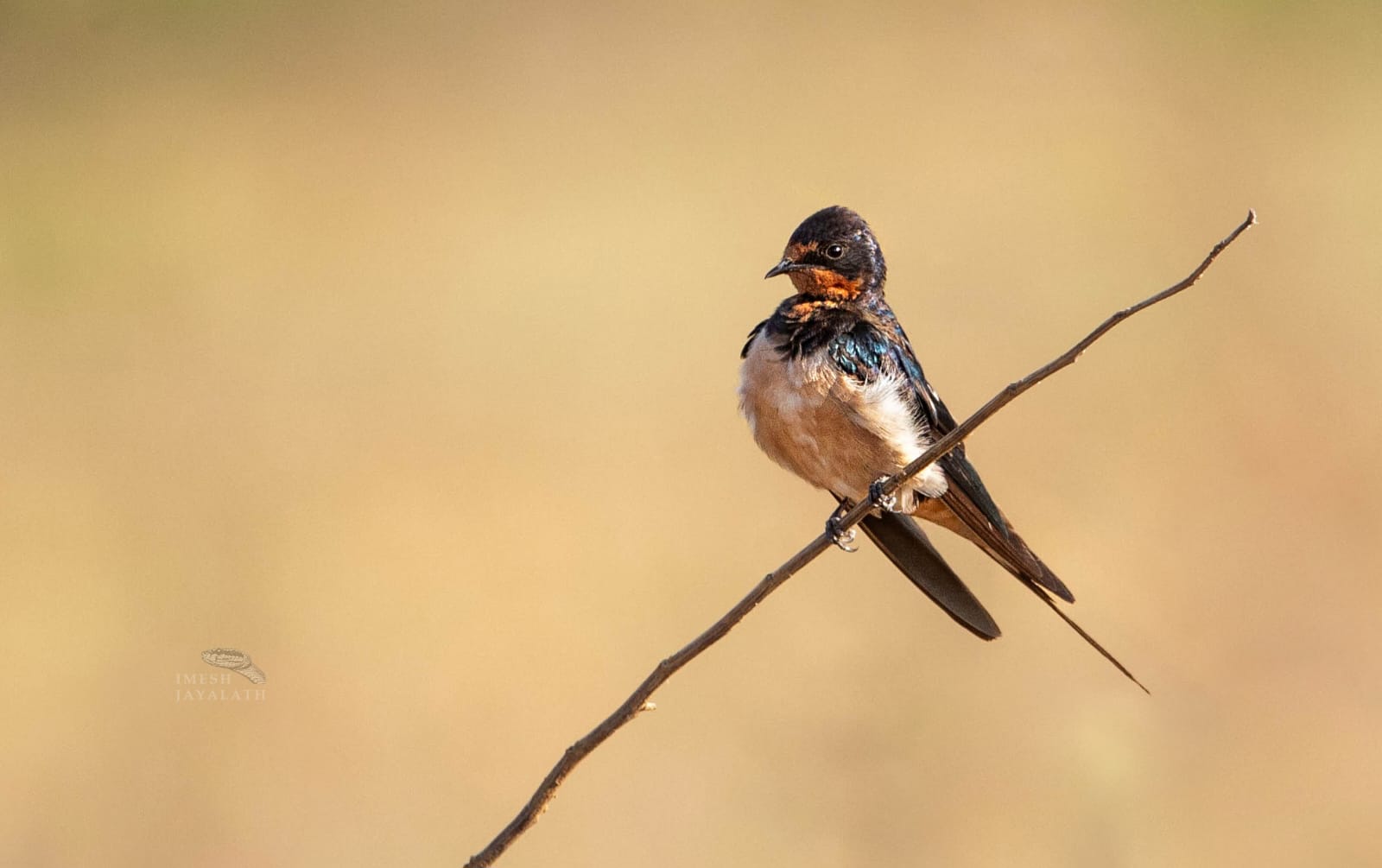
Barn swallow (Hirundo rustica)
The barn swallow (Hirundo rustica) is the most widespread swallow in the world, found across Europe, Asia, Africa, and the Americas, and is a familiar bird closely associated with human settlements. It is easily recognized by its glossy blue upperparts, rufous throat and forehead, pale underparts, and long, deeply forked tail with white spots. Barn swallows prefer open habitats such as farmland, grasslands, and wetlands, nesting mainly on man-made structures like barns, houses, bridges, and sheds using cup-shaped mud nests. They are strong migrants, travelling thousands of kilometres between breeding and wintering grounds, and feed almost entirely on flying insects caught in mid-air. Usually seen in pairs or flocks, they are social birds with cheerful twittering calls and strong site loyalty, often returning to the same nesting place each year. Despite local declines in some regions due to reduced insect availability, the species remains common globally and is listed as Least Concern by the IUCN.